Reading the Signs: How to Tell When Mobile's Summer Heat Is Pushing Your Trees Past Their Limits
Photo: Authors of the study: Yuya Fukano https://orcid.org/0000-0001-9057-4742 , Wataru Yamori https://orcid.org/0000-0001-7215-4736, Hayata Misu, Mitsuhiko P. Sato https://orcid.org/0000-0001-5383-5499, Kenta Shirasawa https://orcid.org/0000-0001-7880-62
There is a particular quality to a Mobile summer that residents understand intuitively and visitors find difficult to describe accurately. It is not simply hot. It is a sustained, compounding heat that settles into the landscape by late May and does not release its grip until well into September. Humidity levels that would feel extreme in most of the country are routine here. Ground temperatures beneath asphalt and concrete can exceed air temperatures by twenty degrees or more. And rainfall, while sometimes plentiful, arrives in concentrated bursts that the compacted urban soils of older neighborhoods cannot always absorb effectively.
For the trees growing in this environment, summer is not a season of abundance. It is a season of stress management.
Why Gulf Coast Summers Are Uniquely Difficult for Trees
Tree physiology operates according to a set of conditions that Mobile's summer climate frequently pushes to the edge of. Photosynthesis, the process by which trees convert sunlight into energy, becomes increasingly inefficient as leaf temperatures rise above approximately 95 degrees Fahrenheit. At that threshold, trees begin closing their stomata—the microscopic pores on leaf surfaces through which gas exchange occurs—as a self-protective measure against water loss.
The problem is that stomatal closure also halts carbon dioxide uptake, which means the tree is no longer producing the carbohydrates it needs to sustain root growth, defend against pathogens, and maintain cellular function. A tree in this state is running on reserves rather than current production. If the heat persists long enough, or if the tree entered summer already depleted from other stressors, those reserves can be exhausted.
Compounding this is Mobile's characteristic combination of heat and humidity. High ambient moisture does not protect trees from heat stress in the way many homeowners assume. In fact, high relative humidity can slow the evaporative cooling that would otherwise occur through transpiration, leaving leaf tissue exposed to sustained high temperatures with limited relief.
Recognizing Stress Indicators Before Permanent Damage Occurs
The ability to identify heat stress early is the single most valuable skill a homeowner can develop during summer. Many of the visible symptoms are subtle in their initial stages, and the window between early stress and irreversible damage is often narrower than it appears.
Leaf scorch is the most recognizable indicator and one of the first to appear. Scorched leaves display browning along their margins and between their veins while the tissue closest to the midrib may remain green for a time. This pattern distinguishes heat and drought scorch from fungal leaf diseases, which typically produce more uniform discoloration or distinct spotting patterns.
Premature leaf drop during summer is another significant indicator. While some deciduous trees shed a portion of their leaf load as a water conservation strategy, widespread or accelerated drop—particularly if it is accompanied by leaf scorch—suggests the tree is under genuine physiological strain.
Wilting or leaf curl during the hottest part of the afternoon may be a normal temporary response, but persistent wilting that does not resolve overnight is cause for concern. Leaves that remain curled or drooped the following morning indicate that the root system is unable to replenish moisture at the rate the canopy is losing it.
Dieback at branch tips during or immediately following a heat event suggests that the vascular system supplying those terminal branches was insufficient to maintain tissue hydration under peak demand conditions.
Unusually heavy seed or fruit production in midsummer can also be a stress response. Trees that sense physiological threat sometimes accelerate reproductive output as a biological survival mechanism, directing resources toward seed production rather than vegetative growth.
The Watering Mistakes That Make Things Worse
Well-intentioned homeowners frequently cause additional harm during summer stress events through improper watering practices. Understanding what not to do is as important as knowing what to do.
The most common error is frequent, shallow irrigation. Applying small amounts of water daily encourages roots to remain near the soil surface, where they are most vulnerable to heat and drought. Deep, infrequent watering—applied slowly enough to penetrate twelve to eighteen inches into the soil—trains root systems to occupy the deeper, cooler, more moisture-stable soil layers where they are better equipped to sustain the tree during extended dry periods.
Overhead irrigation during peak heat hours is another problematic practice. Water applied to foliage during afternoon heat can evaporate before reaching the root zone and, in some cases, can create a lens effect that concentrates light and intensifies leaf scorch. Early morning irrigation, directed at the root zone rather than the canopy, is consistently more effective.
Runoff from hardscape surfaces presents a related challenge in Mobile's urban neighborhoods. Driveways, patios, and walkways shed both water and heat, and trees planted adjacent to these surfaces often receive water that runs across the surface rather than percolating through it. Directing downspout discharge toward tree root zones and maintaining a mulched buffer between hardscape and root zone can meaningfully improve moisture retention.
Seasonal Care Strategies for Mobile's Climate
Several proactive measures taken before or during summer can substantially reduce the impact of heat stress on established trees.
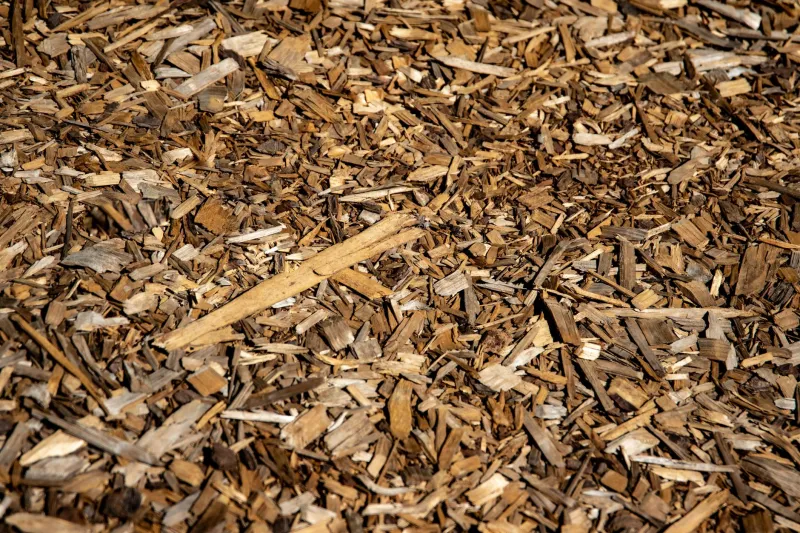
Mulching the root zone is the single most cost-effective intervention available to homeowners. A properly applied layer of organic mulch—three to four inches deep, extending to the tree's drip line, and kept clear of direct contact with the trunk—insulates the soil against temperature extremes, retains moisture, and gradually improves soil structure as it decomposes. The difference in soil temperature between a mulched and unmulched root zone can exceed ten degrees Fahrenheit during peak summer conditions.
Avoiding significant pruning during peak summer heat is advisable for most species. Pruning creates wounds that require energy to compartmentalize, and trees under heat stress have limited energy reserves available for that process. Structural pruning is generally better scheduled for late fall or late winter in Mobile's climate.
Monitoring irrigation system performance is particularly important for trees that rely on automated systems. Emitter clogging, pressure fluctuations, and coverage gaps are common and may not be apparent until stress symptoms appear. A mid-summer audit of irrigation coverage in the root zone is a straightforward precaution.
Avoiding fertilization during drought or heat stress events is another important principle. Fertilizers increase the osmotic demand on roots and can exacerbate moisture stress in trees that are already struggling to maintain hydration. Fertilization is most appropriately timed for early spring or fall in Mobile's climate.
When a Professional Assessment Is the Right Call
Many summer stress symptoms are manageable with the measures described above, but certain presentations warrant professional evaluation rather than a homeowner response.
If stress symptoms are concentrated on one side of the canopy or in a specific section of the crown rather than distributed generally, the cause may be structural or vascular rather than environmental. Asymmetric decline can indicate root damage, girdling roots, or internal decay that a soil amendment or irrigation adjustment will not address.
If a tree shows rapid progression of symptoms over a period of days rather than weeks, or if stress indicators are accompanied by unusual odors, weeping bark, or visible fungal growth, the situation warrants immediate professional attention.
Summer is also an appropriate time to schedule a general health assessment for any mature tree that has not been evaluated recently. Heat stress often reveals underlying vulnerabilities that would not be apparent during cooler, lower-demand seasons—making it, paradoxically, one of the more diagnostically useful times of year for a professional to observe a tree in its natural operating conditions.
Mobile's summers will not become more forgiving. But with attentive observation and informed care, the trees growing through them can.