Live Oaks or Crepe Myrtles? How to Choose the Right Trees for Your Mobile, Alabama Property
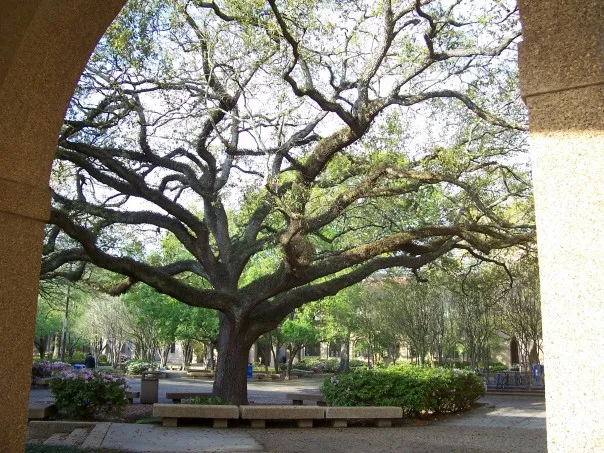
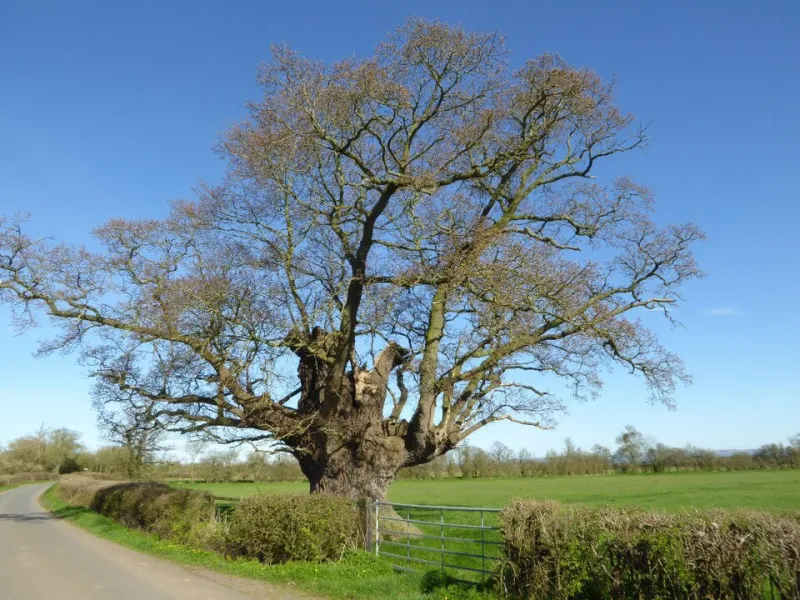
Photo: Tosagic at English Wikipedia, Public domain, via Wikimedia Commons
Few decisions in residential or commercial landscaping carry more long-term consequence than tree selection. A tree planted today may still be shaping your property — and your maintenance budget — decades from now. In Mobile, Alabama, where a humid subtropical climate creates both extraordinary growing conditions and unique horticultural challenges, choosing the right species requires more than aesthetic preference. It demands an understanding of biology, site conditions, and long-term landscape goals.
Two species consistently dominate conversations about tree planting on the Gulf Coast: the live oak (Quercus virginiana) and the crepe myrtle (Lagerstroemia indica and its hybrids). Both are deeply embedded in the visual identity of the South, both perform well in Mobile's climate, and both offer distinct advantages depending on how and where they are planted. But they are fundamentally different trees, suited to different purposes, different spaces, and different property owners.
This guide is designed to help you think through that choice with clarity.
Understanding Mobile's Climate: What Your Trees Are Up Against
Before comparing species, it is worth establishing what any tree planted in Mobile must contend with. The city's humid subtropical classification (Köppen Cfa) means long, hot summers with high relative humidity, mild winters that occasionally dip below freezing, and an annual rainfall average exceeding 65 inches. The soil across much of Mobile County ranges from sandy loams near the coast to heavier clay soils further inland, with significant variation in drainage capacity.
This climate is extraordinarily productive for tree growth — but it is equally productive for fungal pathogens, insect pests, and the kind of aggressive weed competition that can stress young trees during establishment. Storm activity from June through November adds wind and flood stress to the equation. Any species planted here needs to be genuinely adapted to these conditions, not merely tolerant of them.
Both live oaks and crepe myrtles meet that standard. The question is which one meets your specific site and landscape requirements.
The Live Oak: A Long-Term Investment in Permanence
The southern live oak is arguably the most iconic tree in the Gulf Coast landscape. Semi-evergreen, broad-spreading, and capable of living for centuries, it represents a generational commitment to the land. For properties where long-term canopy, shade, and structural grandeur are the priority, few trees in the eastern United States can match it.
Growth Characteristics and Space Requirements
Live oaks grow relatively slowly in their early years but accelerate once established. A mature specimen can spread 60 to 100 feet wide — sometimes wider — with a canopy that eventually dwarfs the trunk in visual scale. This spread is not merely aesthetic; it is functional. A mature live oak can provide significant cooling shade for a structure, reduce HVAC demand during Mobile's brutal summer months, and anchor a landscape in a way that no other single planting can replicate.
However, that eventual size demands respect at the time of planting. Live oaks require substantial open space, well away from structures, utility lines, and hardscape. Their root systems are extensive and surface-seeking in compacted soils, which can create conflicts with driveways, sidewalks, and foundations if siting is poorly planned. This is a tree that rewards careful placement and punishes careless installation.
Soil Adaptability and Pest Resistance
Live oaks are notably adaptable across a range of soil types, performing well in both sandy coastal soils and the heavier clays found throughout Mobile County. They tolerate periodic flooding and moderate drought once established, making them well-suited to the variability of the Gulf Coast growing environment.
From a pest and disease standpoint, live oaks in Mobile are generally robust. The primary concerns include oak gall wasps, which cause cosmetic but rarely serious damage, and hypoxylon canker, a fungal pathogen that primarily affects trees already weakened by drought or root stress. Proper planting, adequate root zone space, and routine monitoring by a certified arborist are the most effective preventative measures.
Long-Term Maintenance Considerations
Mature live oaks require relatively modest routine maintenance — periodic crown cleaning to remove deadwood, occasional structural pruning to address co-dominant stems or over-extended limbs, and root zone management to preserve soil health. The investment per visit is meaningful, but the frequency is low compared to many other species.
The more significant maintenance consideration is storm preparation (see our separate guide on pre-hurricane tree care). A large, mature live oak in poor structural condition represents a serious liability in hurricane-prone Mobile. Regular professional assessments are essential, not optional.
The Crepe Myrtle: Versatility, Color, and Manageable Scale
If the live oak is a commitment, the crepe myrtle is a conversation. Smaller, faster-growing, and available in a remarkable range of cultivar sizes — from dwarf shrubs to 30-foot multi-trunk trees — crepe myrtles offer flexibility that live oaks simply cannot match. They are the workhorse of Gulf Coast ornamental planting, and for good reason.
Growth Characteristics and Site Flexibility
Modern crepe myrtle cultivars range from compact varieties suited to foundation plantings to larger selections appropriate for street tree applications or commercial property borders. This scalability makes them uniquely adaptable to sites where a live oak would be impractical — narrow planting strips, utility corridors, smaller residential lots, or commercial landscapes with overhead clearance restrictions.
Crepe myrtles are deciduous, dropping their leaves in late fall and leafing out again in spring. This seasonal quality is actually an advantage in some applications: winter sun penetration through a bare canopy can reduce heating costs for structures positioned to the south or west of the planting.
Their signature summer bloom — available in white, pink, red, lavender, and deep purple depending on cultivar — provides ornamental value that live oaks simply do not offer. For commercial properties where visual impact and seasonal interest are priorities, crepe myrtles are difficult to surpass.
Pest and Disease Considerations in Mobile's Climate
Crepe myrtles are not without their vulnerabilities in Mobile's humid environment. Powdery mildew, a fungal pathogen that thrives in conditions of high humidity and poor air circulation, has historically been a significant issue — though many modern hybrid cultivars carry strong resistance. When selecting a crepe myrtle for a Mobile property, cultivar selection matters enormously. Varieties in the Natchez, Tuscarora, and Catawba series, among others, offer proven performance in Gulf Coast conditions.
Crepe myrtle bark scale, an introduced pest that has spread throughout the southeastern United States, is now present in Mobile County and warrants monitoring. Infestations produce a black sooty mold that coats branches and reduces the tree's ornamental appeal. Management is achievable through systemic insecticide treatments applied by a licensed professional, but it adds to the long-term maintenance picture.
The Crape Murder Problem
No discussion of crepe myrtle maintenance in the South is complete without addressing the practice commonly known as "crape murder" — the severe, repeated topping of crepe myrtles that produces knobby, disfigured branch ends and structurally weakened regrowth. This practice is widespread, deeply entrenched in regional landscaping culture, and entirely counterproductive.
Properly maintained crepe myrtles require only selective light pruning to remove crossing branches, spent seed heads, and any growth below the main branching structure. A certified arborist can develop a pruning program that preserves the tree's natural form and long-term health — which is always preferable to the annual butchering that shortens the tree's functional life and compromises its structural integrity.
Making the Right Choice for Your Property
The live oak versus crepe myrtle question does not have a universal answer. It has a site-specific answer — one that depends on the available space, the intended function, the soil conditions, and the long-term maintenance investment a property owner is prepared to make.
For large residential lots or commercial properties with open lawn areas, a live oak planted today becomes a legacy asset within a generation. For smaller lots, urban streetscapes, or applications where seasonal color and manageable scale are the priority, a well-selected crepe myrtle cultivar delivers exceptional value with appropriate care.
In many cases, the most effective landscape strategy incorporates both — live oaks anchoring the long-term canopy structure while crepe myrtles provide ornamental interest and seasonal variation at a more accessible scale.
At Mobile Arborist Co., our certified arborists work with property owners throughout Mobile and the surrounding region to evaluate site conditions, define landscape goals, and recommend species selections that perform over the long term. Tree planting is not a decision that benefits from guesswork — and the right professional guidance at the outset prevents costly corrections down the road.
Ready to make an informed tree selection for your property? Contact Mobile Arborist Co. to schedule a consultation with one of our certified arborists.