What's Killing Your Tree From the Ground Up: The Hidden Threat of Soil Compaction in Mobile
The Problem No One Sees Until It's Too Late
Most tree problems announce themselves. Discolored leaves, splitting bark, and fungal growth are all visible signals that something has gone wrong. Soil compaction, by contrast, works quietly and incrementally — compressing the earth around a tree's root zone over months and years until the roots can no longer sustain the canopy above.
In Mobile, Alabama, where mature live oaks, magnolias, and pecans define the character of residential streets and historic neighborhoods, soil compaction is one of the most underdiagnosed threats to long-term tree health. Construction activity, heavy foot traffic, and the region's clay-heavy soils all contribute to a condition that effectively seals the ground against the air, water, and biological activity that roots depend on.
By the time most homeowners notice that something is wrong, the tree has already been struggling for years.
Why Mobile's Soils Are Particularly Vulnerable
Not all soils compact equally. Mobile sits atop a landscape dominated by fine-grained clay soils — a composition that retains moisture well but compresses under pressure far more readily than sandy or loam-based alternatives. When this clay is repeatedly compressed, individual soil particles pack tightly together, eliminating the pore space that roots use to breathe and absorb nutrients.
Unlike sandy soils that drain quickly and resist compaction, Mobile's clay holds the impression of every heavy load placed on it. A single construction project — even one that takes place several properties away — can send equipment across a root zone and permanently alter the soil structure beneath a tree that appears otherwise healthy.
The region's wet seasons compound the problem. Saturated clay compacts even more readily under weight, meaning that routine yard maintenance performed during or after heavy rainfall can cause damage that dry-season work would not.
Common Causes on Residential and Commercial Properties
Soil compaction rarely traces back to a single event. More often, it accumulates through a combination of ordinary activities that individually seem harmless.
Construction and renovation work represent the most acute threat. Whether it's a new driveway, a home addition, or a utility installation, heavy equipment operating within a tree's critical root zone — generally defined as extending to the outer edge of the canopy — can compress soil to depths of twelve inches or more in a single pass.
Repeated foot traffic is a slower but equally damaging contributor. Paths that cut across lawns, areas near entry gates, and high-use spaces around commercial properties all experience the kind of chronic compression that degrades soil structure over time. In Mobile's older neighborhoods, where trees are large and root zones are expansive, foot traffic that residents barely notice can span a significant portion of the root system.
Parking and vehicle access near tree bases is another major factor. Even occasional parking on grass or unpaved areas transmits enormous weight directly into the root zone. Over a season or two, this can produce the same degree of compaction as formal construction activity.
Poor drainage and standing water accelerate the process by keeping soils saturated and more susceptible to compression. Low-lying areas of Mobile yards that pool after rain are particularly at risk.
Signs That Compaction May Already Be Present
Because the damage occurs underground, property owners need to look for surface-level indicators that suggest the root environment has been compromised.
- Soil that feels hard underfoot and resists a screwdriver or soil probe inserted more than a few inches is a reliable physical indicator.
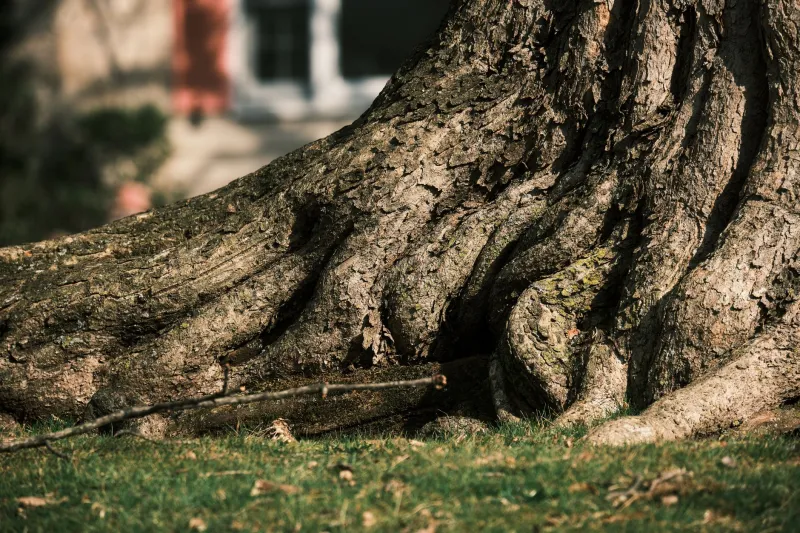
- Visible surface roots that appear to be growing laterally near the soil surface, rather than downward, may indicate that roots are searching for oxygen in the upper inches because deeper soil is too dense to penetrate.
- Thinning or sparse canopy growth that develops gradually over several growing seasons, without an obvious disease or pest cause, often has a soil-based explanation.
- Stunted annual growth, particularly in trees that previously produced vigorous new growth each spring, can signal that root function has declined.
- Moss, algae, or persistent wet patches on the soil surface near the tree base may indicate drainage disruption caused by compaction.
- Soil that sheds water rather than absorbing it — creating runoff even during moderate rainfall — is another sign that pore structure has been compromised.
None of these signs alone constitutes a definitive diagnosis, but any combination of them warrants a closer evaluation by a certified arborist.
Remediation: What Can Be Done
The encouraging news is that soil compaction, when identified before root loss becomes severe, is a treatable condition. Several remediation approaches are available depending on the degree of compaction and the condition of the tree.
Vertical mulching involves drilling or boring a grid of holes throughout the compacted root zone and filling them with a mixture of compost, expanded shale, or other organic material. This physically fractures the compressed soil and introduces organic matter that improves long-term structure and drainage.
Air spading uses compressed air to fracture and loosen compacted soil without cutting through roots. The technique is particularly well suited for work close to the trunk, where mechanical aeration could cause root damage. Once loosened, the soil can be amended with compost or replaced with a more porous growing medium.
Core aeration, more commonly associated with lawn care, can provide modest benefit in lightly compacted zones but is generally insufficient as a standalone treatment for severe compaction around mature trees.
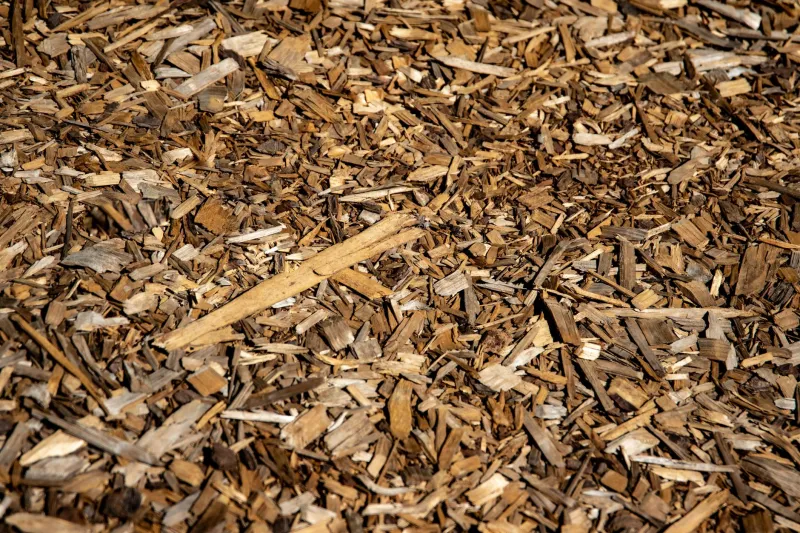
Surface mulching following any remediation work is essential. A four-to-six-inch layer of wood chip mulch applied across the root zone — kept clear of direct contact with the trunk — protects loosened soil from recompaction, moderates soil temperature, and feeds the microbial activity that keeps soil structure healthy over time.
Prevention Is Always Less Costly Than Repair
For properties where construction or renovation work is planned, proactive protection of root zones is far more effective than remediation after the fact. Temporary fencing that physically excludes equipment and foot traffic from the area beneath the canopy is a straightforward and inexpensive measure. Specifying low-ground-pressure equipment and limiting the number of passes through sensitive areas can reduce impact significantly.
For established landscapes, periodic soil testing and annual mulching are among the most reliable long-term investments a property owner can make. Identifying early-stage compaction before symptoms appear in the canopy provides the widest window for intervention.
A Foundation Worth Protecting
Mobile's tree canopy is a defining feature of the city — one that provides shade, manages stormwater, supports property values, and contributes to the quality of life that long-term residents value deeply. Protecting that canopy requires attention not just to what is visible above ground, but to the soil environment where every tree's health ultimately begins.
If you have concerns about soil compaction around trees on your residential or commercial property, a consultation with a certified arborist at Mobile Arborist Co. can provide an accurate assessment and a remediation plan tailored to your specific conditions. The sooner compaction is identified, the more options remain available — and the better the long-term outcome for the trees in your care.