Seven Ways the Lowest Tree Care Bid Ends Up Being the Most Expensive Decision Your Business Makes
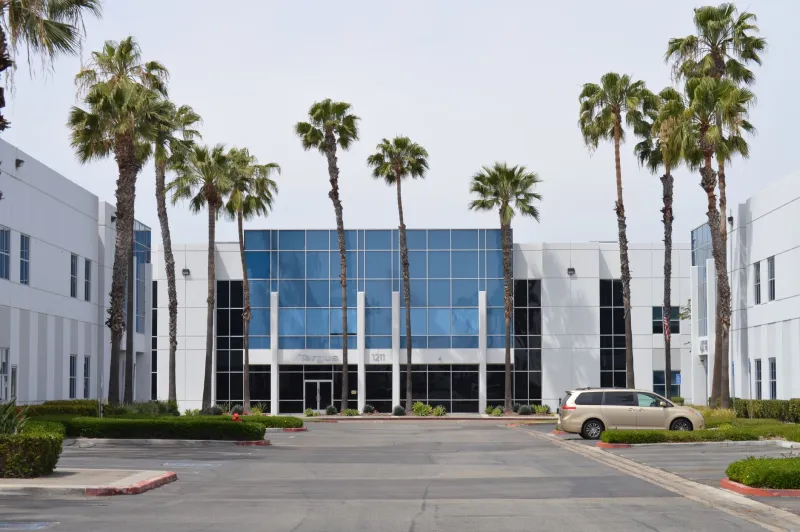
For commercial property managers and business owners in Mobile, tree maintenance occupies an awkward position in the budget conversation. It is not glamorous. It does not generate revenue. And when three contractors submit bids for the same scope of work at three very different price points, the logic of selecting the lowest number feels straightforward.
It is not straightforward. The gap between a qualified arborist and a cut-rate tree service is not simply a matter of equipment quality or crew experience — it is a gap in liability exposure, documentation practices, insurance coverage, and long-term property outcomes that rarely surfaces in the bid itself. What follows is a breakdown of the ways that decision plays out in practice, drawn from the kinds of scenarios that commercial properties across Mobile encounter with regularity.
1. Uninsured Contractors Transfer Their Risk Directly to Your Business
Workers' compensation and general liability insurance are not optional courtesies — they are the legal and financial buffer between a contractor's job site risk and your property's exposure. A tree service operating without adequate coverage does not absorb the cost of a worker injury on your property. Your business does.
In Alabama, the legal standard for premises liability is not generous to property owners who can be shown to have hired inadequately insured contractors. A worker injured while removing a tree from your commercial property — without proper coverage in place — can become a claim against your general liability policy, or worse, direct litigation against your business. Always request certificates of insurance before any work begins, and verify that both workers' compensation and general liability coverage are current and sufficient for the scope of work.
2. Improper Pruning Creates the Liability Problem It Was Supposed to Prevent
The most common reason commercial property managers hire tree services is hazard reduction — removing dead limbs, clearing branches from building entrances, and ensuring that trees near parking areas and walkways do not pose a risk to customers or employees. When that work is done incorrectly, it frequently makes the hazard problem worse.
Flush cuts, stub cuts, and excessive crown reduction — common shortcuts taken by underqualified crews working quickly — create wound sites that resist compartmentalization and invite decay. A tree that receives this treatment may look maintained for a season or two before the internal decay accelerates and structural failure risk increases. If a failure event occurs and your maintenance records show improper work was done, the documentation that was supposed to protect you may instead establish that you had notice of a problematic condition.
3. Skipped Inspections Leave No Paper Trail When You Need One
In a liability claim involving a tree failure on commercial property, one of the first questions an attorney or insurance adjuster will ask is: what was your inspection and maintenance schedule, and what did those inspections document?
A commercial property that has engaged a qualified arborist for documented annual inspections has a defensible record showing reasonable care. A property that hired the cheapest available crew for reactive work only — no formal inspections, no written reports, no condition assessments — has no such record. In the absence of documentation, the legal presumption frequently works against the property owner.
Qualified arborists provide written inspection reports that identify specific trees, document observed conditions, and recommend remediation actions. That paper trail is not a bureaucratic formality. It is evidence of due diligence that can be decisive in a liability context.
4. Tree Removal Done Poorly Damages Infrastructure You Did Not Know Was at Risk
Commercial properties in Mobile often have mature trees in proximity to paved surfaces, underground utilities, irrigation systems, and building foundations. Removing a large tree from a constrained urban site requires planning, rigging expertise, and an understanding of how root systems interact with surrounding infrastructure.
Cut-rate crews working without this expertise routinely cause collateral damage: cracked pavement from dropped sections, severed irrigation lines from hasty stump grinding, and soil disturbance that undermines adjacent plantings or hardscape. The removal bid that seemed economical rarely accounts for the cost of repairing a parking lot section or replacing an irrigation zone — expenses that fall entirely to the property owner.
5. Tenant and Customer Complaints Carry Costs That Do Not Appear on Any Invoice
For retail properties, medical office complexes, apartment communities, and other commercial sites where the appearance and safety of the outdoor environment directly affects tenant satisfaction and customer perception, the condition of trees is not a peripheral concern. Tenants in commercial leases increasingly include exterior maintenance standards as conditions of renewal. Customers who navigate a parking lot beneath visibly dead branches or overgrown canopy that blocks signage make judgments about the property — and the businesses within it.
These costs are diffuse and difficult to quantify, but they are real. A commercial property that consistently defers or underinvests in tree care accumulates a reputational and aesthetic deficit that affects occupancy rates and customer traffic in ways that far exceed the cost difference between a qualified arborist and the lowest available bid.
6. Storm Season Multiplies Every Deferred Maintenance Decision
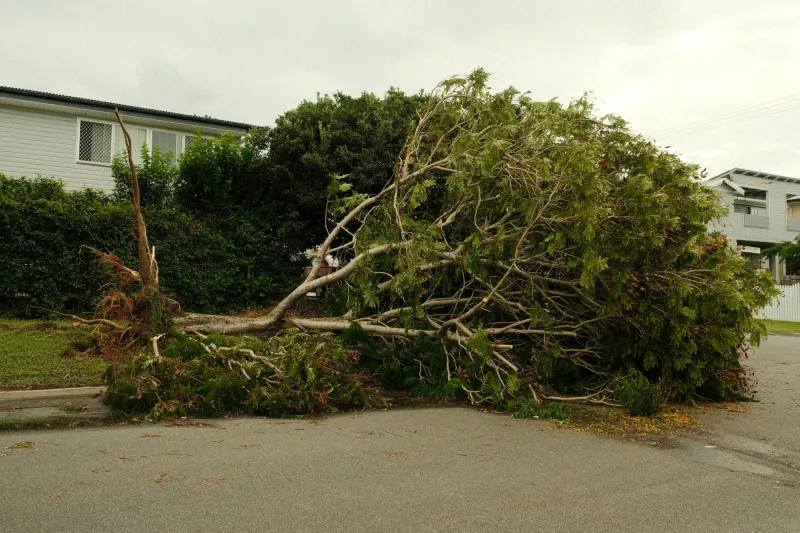
Mobile's hurricane season transforms deferred tree maintenance from a theoretical risk into an active one. Trees that have been improperly pruned, that have untreated structural defects, or that have been left in declining condition following storm damage become high-consequence liabilities when the next tropical system arrives.
The cost of emergency storm damage response — both in direct tree service fees and in property repair — is substantially higher than the cost of proactive maintenance. Commercial properties that enter hurricane season with documented arborist assessments and well-maintained trees consistently experience less storm damage and lower post-storm remediation costs than those that do not. The investment calculus is not complicated.
7. Property Valuation and Insurance Underwriting Are Affected by Tree Condition
This is the cost that surprises commercial property owners most consistently: the condition and management history of trees on a commercial property can affect both its appraised value and its insurability. Mature, well-maintained trees contribute positively to commercial property valuations — a finding supported by research across multiple real estate markets. Poorly maintained, declining, or structurally compromised trees do the opposite.
More immediately, insurance underwriters for commercial properties are increasingly attentive to tree-related risk factors. Properties with documented histories of hazardous trees, prior claims involving tree failures, or no evidence of routine professional maintenance may face higher premiums or coverage exclusions. The cost of adequate tree care, viewed against this backdrop, is not an expense to be minimized — it is a risk management investment with a measurable return.
For commercial property owners and managers in Mobile, the tree care decision is ultimately a risk management decision. The bid you accept is not just a number on a page — it is a statement about how your business values its liability exposure, its tenant relationships, its storm resilience, and its long-term asset quality. Choose accordingly.