What a Trained Eye Catches Before Your Trees Catch Fire: The Case for Routine Arborist Inspections
There is a particular kind of regret that comes after a tree failure. A homeowner walks outside to find a massive limb across the hood of a car, or worse, draped over a roofline. The call to an emergency tree service follows, then the invoice—and almost always, the same question: Could this have been prevented?
In the vast majority of cases, the honest answer is yes.
Mobile, Alabama sits in one of the most demanding climates in the country for tree health. The combination of Gulf humidity, hurricane-season wind loads, heavy clay soils, and prolonged summer heat creates conditions where structural and biological problems inside trees can develop quickly and quietly. What appears to be a healthy, vigorous canopy from the sidewalk may conceal decay columns, failing root architecture, or insect galleries that have been progressing for years. A certified arborist is trained to find exactly those problems—before they find you.
What Homeowners Typically Miss
The average property owner evaluates a tree the same way they evaluate most things: by how it looks. Green leaves, upright posture, no obvious cracks. By that standard, a tree can appear perfectly fine right up until the moment it isn't.
Certified arborists use an entirely different framework. During a professional inspection, they are not simply looking at the tree—they are reading it. Every feature of the bark, branch architecture, root flare, and surrounding soil tells part of a larger story.
Some of the most consequential findings are also the least visible:
-
Included bark at major branch unions. When two stems grow together at a tight angle, bark can become embedded between them rather than forming a solid wood connection. The resulting union is mechanically weak and prone to splitting under wind or ice load. From the ground, it may look like a healthy fork. To a trained arborist, it is a structural liability.
-
Fungal fruiting bodies at the base or on the trunk. Shelf fungi, conks, and bracket growths are not the disease itself—they are the reproductive output of fungal colonies that have already established inside the wood. By the time a conk appears externally, significant internal decay may already be present.
-
Subtle canopy dieback. A branch here, a cluster of dead twigs there—these small signals often indicate root stress, vascular disease, or pest activity well before the problem becomes obvious across the whole tree.
-
Changes in root flare geometry. Where a tree meets the ground should show a gradual widening—the flare. A straight or sunken transition can indicate girdling roots, soil compaction, or improper planting depth, all of which compromise long-term stability.
The Specific Hazards Common to Mobile Properties
Mobile's landscape presents a set of challenges that make professional assessment particularly valuable compared to more temperate regions.
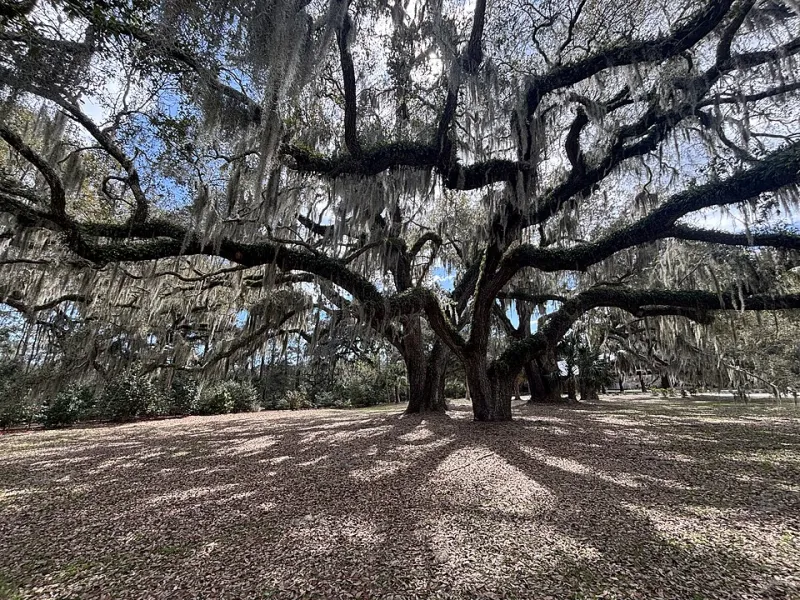
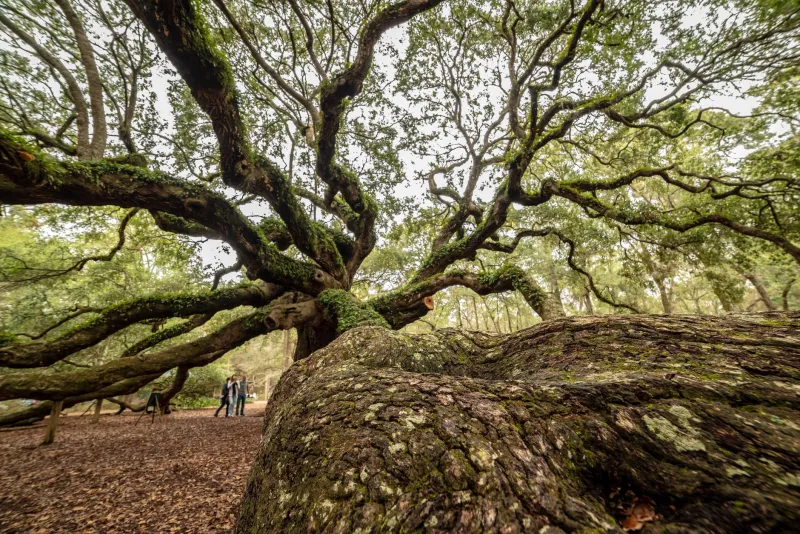
Southern live oaks (Quercus virginiana)—among the most beloved and structurally complex trees in the region—frequently develop co-dominant stems and wide-spreading canopies that create multiple potential failure points. Their sheer mass means that when a structural failure does occur, the consequences are severe. A routine inspection by a certified arborist can identify which unions warrant monitoring, which may benefit from supplemental cabling, and which represent genuine near-term hazards.
Crepe myrtles throughout Mobile have suffered years of improper pruning—the notorious "crepe murder" practice—that leaves large, exposed wounds prone to fungal colonization and internal rot. What looks like a full, flowering canopy may be masking compromised wood at the topping cuts.
Loblolly and longleaf pines are susceptible to pine bark beetles, which can move through a tree with alarming speed once a population establishes. Early infestation signs—pitch tubes, reddish boring dust, fading foliage in isolated sections—are recognizable to trained inspectors but easy to overlook for anyone not specifically looking for them.
After significant weather events, which Mobile experiences with regularity, trees often sustain what arborists call hidden storm damage: root plate movement, hairline trunk cracks, and partially torn branch attachments that are not immediately visible but substantially increase failure risk during subsequent storms.
The Cost Comparison That Changes the Conversation
Routine professional tree assessment in Mobile typically ranges from a modest inspection fee to a more comprehensive evaluation depending on property size and tree count. Emergency tree removal, by contrast, carries a premium that can reach several times the cost of preventive care—and that figure does not account for property damage, insurance deductibles, or the cost of replacing a mature tree that took decades to grow.
Consider a scenario that arborists in Mobile encounter regularly: a large water oak over a residential structure shows early signs of Armillaria root rot—a fungal pathogen common in Gulf Coast soils. Detected during a routine inspection, the options include targeted treatment, strategic removal before the tree becomes a hazard, and replacement planning. The total cost is manageable. Detected after the tree fails during a thunderstorm, the same situation involves emergency removal, debris hauling, roof repair, and potential interior water damage. The financial gap between those two outcomes is not marginal—it is often measured in tens of thousands of dollars.
What to Expect During a Professional Inspection
A thorough arborist assessment is not a five-minute walkthrough. A qualified professional will systematically evaluate each tree from the root zone to the uppermost canopy, using a combination of visual inspection, probing tools, and sometimes specialized equipment such as a resistograph—an instrument that measures wood density and can detect internal voids without damaging the tree.
The inspection typically covers:
- Root zone and soil conditions, including grade changes, surface root exposure, and signs of compaction or poor drainage
- Trunk and bark assessment, checking for cracks, cavities, cankers, and unusual discoloration
- Branch structure and attachment angles, with particular attention to co-dominant leaders and included bark
- Canopy health indicators, including leaf size, color, density, and the presence of dieback
- Pest and disease evidence, from visible insect activity to subtle symptoms of vascular wilt or foliar pathogens
At the conclusion, a competent arborist will provide a written summary of findings, a risk rating for any identified hazards, and a prioritized set of recommendations. That document becomes a planning tool—something a homeowner can use to budget for tree care systematically rather than reactively.
Scheduling Before the Season Demands It
In Mobile, the window between the end of winter and the beginning of hurricane season is the most strategic time for professional tree assessment. Trees are emerging from dormancy, making new growth patterns and stress responses visible, while there is still adequate time to address structural concerns before Gulf storms begin tracking toward the coast.
The arborists at Mobile Arborist Co. conduct comprehensive property assessments year-round, but early spring inspections allow the most complete picture—and the most time to act on what is found.
A tree that has stood in your yard for thirty years feels permanent. In Mobile's climate, permanence is earned through attention. The arborist's eye is not looking for problems to manufacture—it is looking for the ones already present, waiting for the right conditions to announce themselves. Finding them first is always the better option.