After the Storm Passes: Why the Next 72 Hours Determine Whether Your Landscape Survives the Next Five Years
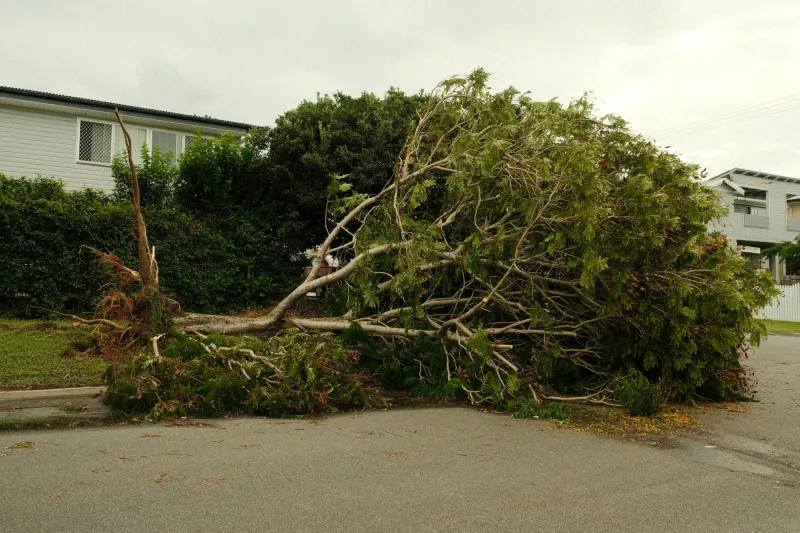
The wind has stopped. The power is coming back on. The debris is still scattered across the yard, and somewhere in the chaos, a major limb has come down, a tree is leaning at an angle it was not leaning before, and another is missing half its canopy. The storm is over, but — and this is the part that most Mobile homeowners do not fully appreciate — the most consequential decisions for their landscape are only just beginning.
In my experience working with trees across Mobile and the surrounding Gulf Coast region, I have seen hurricanes cause significant damage that trees ultimately recovered from. I have also seen trees that sustained relatively modest storm damage decline irreversibly over the following three to five years — not because the storm was catastrophic, but because the response to it was flawed. The post-storm window is not a formality. It is where landscapes are saved or surrendered.
The Impulse to Act Quickly Creates Its Own Damage
After a major storm, the pressure to restore order is immediate and understandable. Debris needs to be cleared. Access needs to be restored. The yard needs to look like a yard again. That urgency, however, frequently drives decisions that prioritize speed over sound arboricultural practice — and the trees pay the price for years afterward.
The most common mistake I see in the immediate aftermath of a hurricane is what I would describe as reactive topping: the aggressive, indiscriminate removal of damaged limbs without regard for where cuts are made, how much live canopy is being removed, or what the long-term structural consequences will be. A tree that has lost 30 percent of its canopy to storm damage and then has another 30 percent removed through improper emergency pruning is now a severely compromised specimen struggling to photosynthesize, compartmentalize wounds, and rebuild structural integrity simultaneously. Many do not recover.
Proper pruning cuts matter enormously in a post-storm context. Cuts made at the correct location — just outside the branch collar, at an appropriate angle — give the tree its best chance of sealing over the wound and resisting pathogen entry. Cuts made with a chainsaw by someone working quickly and without arboricultural training frequently do the opposite: they leave stubs, strip bark, and create entry points for decay fungi that will compromise the tree's structure for the remainder of its life.
Abandonment Is Not a Neutral Choice
Not all post-storm mistakes are acts of commission. Some of the most damaging decisions homeowners make are decisions to do nothing — to leave visibly damaged trees in place, untreated and uninspected, because the damage appears survivable or because the immediate priority is the house, not the landscape.
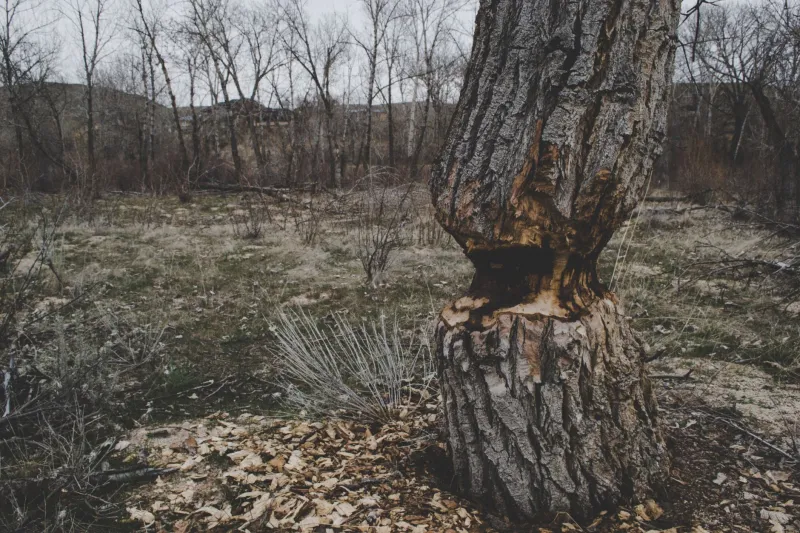
A tree that has been partially uprooted, that has lost a significant scaffold limb, or that has sustained bark stripping along the trunk is not in a stable condition simply because it is still standing. Root systems that have been partially lifted may have severed the feeder roots the tree depends on for water and nutrient uptake. Exposed wood at wound sites becomes colonized by fungi within weeks in Mobile's climate. A tree left in this condition without professional assessment may continue to look alive — even to produce leaves the following spring — while quietly losing structural integrity beneath the surface.
The three-to-five-year decline I referenced earlier typically follows exactly this pattern. A homeowner sees green leaves and concludes the tree survived. What they are actually observing is the tree drawing on stored energy reserves while its root system and structural integrity continue to deteriorate. By the time visible symptoms become undeniable, the tree is often beyond rehabilitation.
Contractor Selection in the Post-Storm Rush Is Where Things Go Most Wrong
Mobile after a major hurricane is a contractor's market. Demand for tree services spikes dramatically, legitimate crews are booked weeks out, and the gap is filled — as it always is — by out-of-state operators, unlicensed workers, and individuals with a chainsaw and a truck who are prepared to take cash and move on before the consequences of their work become apparent.
I am not suggesting that every contractor who arrives in Mobile after a storm is unqualified. Many are skilled professionals who travel to disaster-affected areas specifically to assist overwhelmed local crews. But the environment of post-storm urgency makes due diligence more difficult precisely when it is most important. Homeowners who would normally research a contractor carefully, verify insurance, and ask for references find themselves making decisions in an afternoon because the debris needs to move.
The consequences of hiring an unqualified contractor in this context are not limited to poor pruning cuts. They include improper use of climbing equipment that further damages bark and cambium, incorrect assessment of which trees can be saved versus which require removal, and — critically — the absence of liability insurance when something goes wrong. A worker injured on your property while operating without proper coverage creates a legal and financial exposure that can dwarf the cost of the tree work itself.
What a Proper Post-Storm Response Actually Looks Like
A sound post-storm tree care response begins with assessment, not action. Before any pruning or removal work begins on damaged trees, a qualified arborist should evaluate each specimen for survivability, structural risk, and the appropriate scope of remediation work. This assessment takes time, but it is the foundation on which everything else depends.
For trees that are viable candidates for recovery, the work should be staged appropriately. Emergency hazard pruning — removing limbs that pose an immediate risk to people or structures — is the first priority. Structural pruning to address storm damage and restore crown balance follows, ideally after the tree has had an opportunity to stabilize. Soil care, including the restoration of mulch to the root zone and addressing any compaction caused by heavy equipment during cleanup, supports long-term recovery.
For trees that cannot be saved, prompt, professional removal is the correct answer — not because the aesthetic problem needs to be resolved quickly, but because a dying tree left in place continues to lose structural integrity and eventually becomes a more dangerous and more expensive removal.
Hurricanes are not optional features of life on the Gulf Coast. They are a recurring reality that every Mobile homeowner's landscape management strategy must account for. What is optional — and what makes all the difference — is how deliberately and how knowledgeably you respond when one arrives.