Vanishing Canopy: How Deferred Tree Care Is Quietly Erasing Mobile's Iconic Oaks
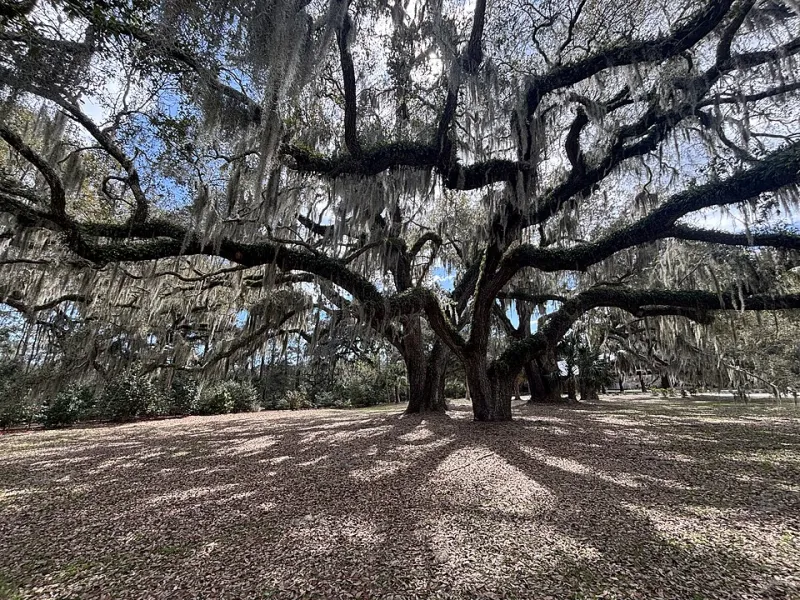
Photo: FranzKafkasWiki, CC BY 4.0, via Wikimedia Commons
Drive through Midtown, Spring Hill, or the Old Dauphin Way Historic District on any given afternoon and the shade feels almost architectural. Enormous live oaks spread their limbs over rooftops and sidewalks, their canopies knitted together into a green ceiling that defines the neighborhood as much as the homes beneath them. That canopy, however, is shrinking—not dramatically, not all at once, but steadily, one neglected tree at a time.
The cause is rarely a single catastrophic event. It is, more often, years of quiet inattention.
The Compounding Nature of Tree Neglect
Trees do not fail overnight. What appears to be a sudden collapse—a massive limb crashing through a fence, a trunk splitting during a routine thunderstorm—almost always has a history. Certified arborists refer to this pattern as deferred maintenance debt, a term borrowed from engineering that describes how small, unaddressed problems accumulate until the cost of correction vastly exceeds what early intervention would have required.
In Mobile's established residential areas, the most common neglect patterns follow a predictable sequence. It typically begins with something benign: a small wound from a lawn mower, an unpruned crossing branch, or a patch of soil that has gradually become compacted over years of foot traffic. Left unaddressed, each of these issues creates an entry point for secondary problems. Wounds that are not properly assessed allow fungal pathogens to colonize the sapwood. Crossing branches create friction wounds that girdle healthy tissue. Compacted soil suffocates the fine feeder roots that sustain a tree's vascular system.
By the time a homeowner notices something visibly wrong—sparse foliage, weeping bark, unusually brittle limbs—the underlying damage may already be extensive.
What Early Warning Signs Actually Look Like
The challenge with oak decline in Mobile is that the early indicators are easy to rationalize away. A few yellow leaves in midsummer might be attributed to drought stress. Bracket fungi growing at the base of a trunk might be dismissed as a cosmetic issue. A lean that seems slightly more pronounced than it was two seasons ago might be chalked up to imagination.
None of these observations should be dismissed.
Fungal conks and bracket formations at the root flare or lower trunk are among the most reliable indicators of advanced internal decay. By the time these structures are visible externally, the decay column within the wood may extend several feet upward into the tree. Similarly, epicormic sprouting—clusters of small shoots emerging directly from the trunk or major limbs—signals that the tree is under significant physiological stress and redirecting energy reserves in a kind of survival response.
Other indicators worth noting include:
- Crown dieback, particularly when it progresses from the outermost branch tips inward over successive growing seasons
- Bark abnormalities such as deep vertical cracks, areas of sunken or discolored bark, or sections where the bark has separated from the wood beneath
- Root zone disturbances, including soil heaving near the base, severed surface roots from construction or landscaping activity, or the installation of hardscape materials too close to the trunk
- Unusual insect activity, including bore holes, sawdust-like frass accumulating at the base, or excessive woodpecker attention to a specific section of trunk
Each of these signs warrants a professional evaluation—not because every symptom signals imminent failure, but because a qualified arborist can determine the difference between a tree that is stressed and recoverable and one that poses a genuine structural risk.
The Structural Risk That Follows Decline
Mobile's position along the Gulf Coast means that any structurally compromised tree exists within a threat environment unlike most of the country. Hurricane season runs from June through November, and even storms that make landfall far to the west or east generate sustained wind events capable of toppling weakened trees. A live oak that might stand for another decade under normal conditions can become a projectile in a Category 1 wind field if its root plate is compromised or its internal wood has decayed beyond structural thresholds.
This intersection of biological decline and storm risk is precisely why arborists in this region treat tree health as a storm preparedness issue, not merely an aesthetic one. A tree that fails during a wind event does not simply represent the loss of the tree itself. It represents potential structural damage to homes, vehicles, power infrastructure, and in the worst cases, injury to occupants.
The financial calculus is sobering. Emergency tree removal following storm damage—particularly when cranes or specialized equipment are required—routinely costs two to four times what proactive removal or structural intervention would have cost during a non-emergency window. Insurance claims may or may not offset that expense, and many homeowner policies include exclusions for trees that were visibly diseased or structurally deficient prior to the storm event.
Reversing the Damage: When Intervention Is Still Possible
The most important thing to understand about oak decline is that it is not always irreversible. Trees are remarkably resilient organisms, and many that appear to be in serious distress can be stabilized and returned to acceptable health with the right combination of interventions.
Soil remediation is frequently the most impactful starting point. Vertical mulching, aeration, and the application of organic compost to the root zone can dramatically improve the growing conditions that determine whether a stressed tree recovers or continues to decline. In cases where construction activity has severed a significant portion of the root system, strategic fertilization and irrigation management can support the remaining root mass while the tree compensates.
Structural pruning—removing dead, diseased, or structurally compromised limbs—reduces the load on a weakened root system and eliminates the pathways through which decay organisms spread. This is distinct from the indiscriminate topping and over-pruning that, unfortunately, remains common in Mobile and accelerates the very decline it is meant to address.
For trees with identifiable structural weaknesses in the canopy, cabling and bracing systems can redistribute load and extend the functional life of a specimen that would otherwise require removal.
None of these interventions, however, can substitute for a professional assessment that accurately characterizes the degree of existing damage. The appropriate treatment for a tree with surface-level stress looks very different from the appropriate response to one with advanced internal decay.
Treating the Arborist as a Preventive Partner
The most productive shift in perspective that Mobile homeowners can make is to stop thinking of arborist services as an emergency resource and start treating them as routine preventive care. A scheduled inspection every two to three years for mature trees—and annually for trees that have shown any stress indicators—costs a fraction of what emergency response or liability exposure can generate.
Mobile's historic oaks are not simply attractive features on a property listing. They are ecological infrastructure, stormwater managers, and in some cases, trees that have been growing since before the neighborhoods around them were built. Losing them is not merely an aesthetic loss. It is a permanent reduction in the biological capital of the city's residential landscape.
Deferred maintenance has a cost. It is paid eventually—either in the controlled, manageable form of professional care, or in the unpredictable, often devastating form of tree failure. The choice, in most cases, still belongs to the homeowner.