What's Lurking Beneath Your Lawn: Understanding Tree Root Damage in Mobile's Aging Neighborhoods

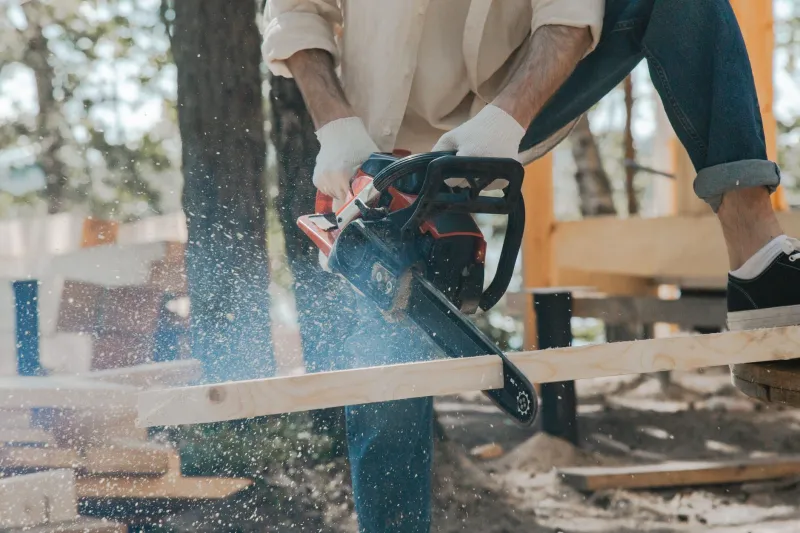
Photo by Photo by Somesh Harshavardhan on Unsplash on Unsplash
For many Mobile homeowners, the trees lining their streets and shading their yards represent generations of growth, beauty, and neighborhood character. What is far less visible—and considerably more consequential—is the network of roots extending beneath driveways, sidewalks, and home foundations. In Mobile's mature neighborhoods, where large hardwoods have had decades to establish themselves in clay-dense soils, subsurface root activity poses a genuine and often underestimated threat to residential and commercial infrastructure alike.
At Mobile Arborist Co., we regularly assess properties where the damage has already progressed well beyond what most owners anticipated. The encouraging news is that early intervention, guided by a certified arborist, can address root encroachment without requiring the removal of otherwise healthy trees.
Why Mobile's Soil Conditions Amplify the Problem
Mobile sits on a geological foundation dominated by heavy clay soils, particularly in its older neighborhoods west of downtown and throughout the historic Midtown district. Clay soil presents a paradox for tree roots: it retains moisture well during wet seasons but compacts significantly during dry periods, restricting oxygen and forcing roots to seek more favorable pathways.
When roots encounter compacted clay, they tend to migrate laterally rather than downward, spreading outward in search of water, nutrients, and loose soil. This horizontal growth pattern brings them directly into conflict with hardscape elements—concrete slabs, asphalt driveways, brick walkways, and the shallow-running utility lines that serve many of Mobile's older homes.
The city's subtropical climate compounds the issue further. Alternating cycles of heavy rainfall and summer drought cause the clay to expand and contract repeatedly, a process that accelerates the heaving and cracking that root pressure initiates.
Which Tree Species Pose the Greatest Risk
Not all trees are equally aggressive in their root behavior. Certain species common throughout Mobile's landscape are particularly prone to causing infrastructure conflicts.
Willow oaks and water oaks, widely planted across older Mobile neighborhoods for their rapid growth and generous canopy, produce extensive, shallow root systems that frequently lift sidewalks and infiltrate drainage lines. While these trees offer undeniable aesthetic value, their root architecture requires careful management near hardscape.
Silver maples, once popular as fast-growing shade trees, are among the most problematic species in urban settings nationwide. Their roots actively seek out moisture, making sewer lines and irrigation systems especially vulnerable.
Sweetgum trees, native to the Gulf Coast region and common throughout Mobile County, develop dense surface roots that can buckle pavement and create significant trip hazards on residential walkways.
Chinese tallow trees, an invasive species that has proliferated across Mobile's urban tree canopy, grow aggressively in disturbed soils and are frequently found near older foundations where they cause both structural and plumbing complications.
By contrast, species such as bald cypress, Southern magnolia, and certain native oaks tend to develop deeper, less laterally aggressive root systems—though no tree is entirely without risk when planted too close to structures.
Recognizing the Warning Signs Early
Subsurface root damage rarely announces itself dramatically. More often, it manifests through a series of subtle indicators that homeowners may attribute to other causes.
Cracked or raised pavement along sidewalks and driveways is frequently the first visible sign. If sections of concrete near established trees appear to be lifting or tilting, root pressure beneath the slab is a likely contributor.
Interior foundation cracks, particularly in older pier-and-beam homes common throughout Mobile's historic districts, may indicate that roots have begun displacing the soil supporting the structure. Diagonal cracks running from window or door corners are especially worth investigating.
Recurring drain blockages or slow-running plumbing in older homes with clay pipe sewer systems can indicate root infiltration. Tree roots are naturally drawn to the moisture and nutrients within sewer lines, and even hairline cracks in aging pipes provide sufficient entry points.
Soil subsidence or sunken areas in the yard may indicate that roots have displaced large volumes of soil or that they have created voids as they decay.
Any of these signs warrants a professional assessment before conditions deteriorate further.
Professional Solutions That Preserve Your Trees
One of the most common misconceptions we encounter is that addressing root damage necessarily means removing the tree. In the majority of cases, that is not true. A certified arborist has access to several targeted interventions that can resolve or mitigate root conflicts while preserving the tree.
Root pruning involves selectively cutting roots that are encroaching on structures, using specialized equipment to sever problematic growth without destabilizing the tree. When performed correctly and at appropriate distances from the trunk, root pruning causes minimal long-term harm to the tree.
Root barriers are physical or chemical systems installed in the soil to redirect root growth away from hardscape and utility infrastructure. These are most effective when installed proactively—before a tree is planted or early in its establishment—but can also be retrofitted in some circumstances.
Soil aeration and amendment can encourage roots to grow more deeply rather than laterally, reducing surface conflicts. In Mobile's compacted clay soils, periodic vertical mulching or air spading around established trees can meaningfully alter root behavior over time.
Utility coordination and directional boring for new utility installations near established trees allows contractors to route lines beneath root zones rather than through them, preserving both infrastructure and the tree's structural stability.
The Cost of Waiting
Foundation repairs in the Mobile metro area can range from several thousand dollars for minor crack sealing to well over $20,000 for significant underpinning work. Sewer line replacement in older neighborhoods, particularly those requiring excavation through established landscaping, frequently exceeds $10,000. Sidewalk replacement triggered by root heaving is a recurring municipal expense that also falls on individual property owners in many cases.
An arborist consultation, by comparison, represents a modest investment—and one that often identifies corrective measures far less costly than the structural repairs they prevent. Catching root encroachment early, before it compromises a foundation or infiltrates a utility line, is invariably the more economical path.
If you have mature trees near your home's foundation, driveway, or older plumbing infrastructure, a professional root assessment from Mobile Arborist Co. provides the clarity you need to make informed decisions. Our team brings both the technical expertise and the local knowledge necessary to evaluate risk accurately and recommend solutions tailored to Mobile's distinctive soil and climate conditions.