Why DIY Tree Removal in Mobile Can Cost You Far More Than You Bargained For
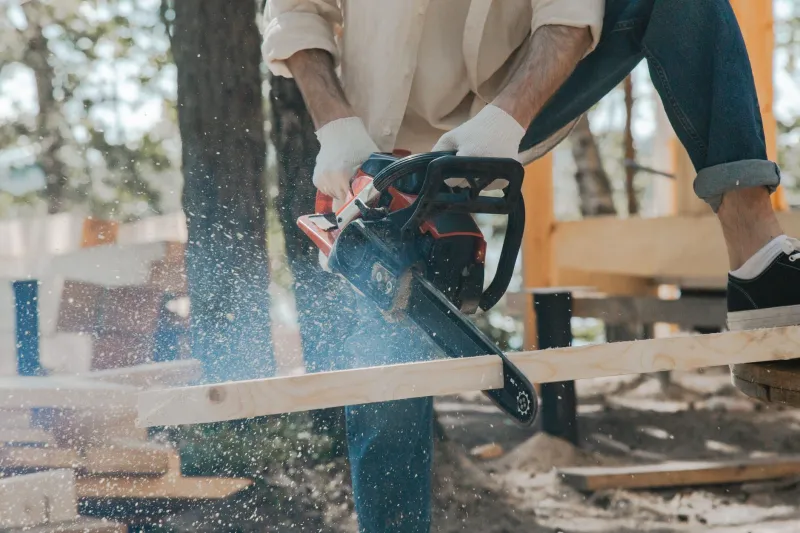
Every spring and fall, hardware stores across Mobile stock their seasonal displays with chainsaws, loppers, and extension pole saws. Online forums are filled with confident tutorials promising that removing a tree is straightforward work—just a matter of careful cuts and some elbow grease. For homeowners looking to save money, the appeal is obvious.
The reality, however, is considerably more complicated. Tree removal is one of the most consistently dangerous tasks a property owner can undertake, and in a city like Mobile—where mature hardwoods grow large, utilities run overhead, and local ordinances carry real teeth—the consequences of a misjudged cut extend well beyond a scraped arm or a dented fence. This article examines the true costs of DIY tree removal and explains why, in most cases, professional arboricultural services represent not just the safer choice but the more economical one.
The Physical Risks Are Not Theoretical
Let us be direct: tree removal kills and seriously injures people every year in the United States. The U.S. Bureau of Labor Statistics consistently ranks tree care among the nation's most hazardous occupations, and that classification applies to trained professionals using proper equipment. For untrained homeowners, the risk profile is substantially higher.
The dangers are varied and not always obvious. A limb that appears to be falling in one direction can "barber chair"—a term for the unpredictable way a partially cut trunk can split vertically and kick backward with tremendous force. Trees leaning against fences, structures, or other trees create tension that releases violently when a cut is made. Root systems weakened by decay may cause a standing tree to topple in an unexpected direction entirely. And working at elevation—whether on a ladder or in the canopy itself—introduces fall hazards that account for a significant share of tree work fatalities.
Consider a scenario that arborists in the Gulf South encounter with some regularity: a homeowner decides to remove a storm-damaged water oak overhanging a detached garage. The tree appears stable. The homeowner makes a series of cuts based on a YouTube tutorial. The trunk splits unexpectedly, the garage sustains a direct hit, and the homeowner is knocked from a ladder in the process. The garage requires $18,000 in repairs. Emergency medical treatment adds another $6,000. A professional removal of that same tree would have cost a fraction of both figures.
This is not an unlikely scenario. It is a pattern that repeats itself with unfortunate frequency.
What Your Homeowner's Insurance Policy May Not Cover
Many Mobile homeowners assume that their standard homeowner's insurance policy provides a reliable safety net for tree-related accidents on their property. In practice, coverage is far more conditional than most policyholders realize.
Insurance policies typically distinguish between damage caused by a covered peril—such as a storm—and damage resulting from negligence or improper maintenance. If an insurer determines that a homeowner undertook tree removal without proper expertise and that removal caused property damage, the claim may be denied or significantly reduced. Insurers employ adjusters specifically to investigate the circumstances surrounding claims, and evidence of DIY chainsaw work is not difficult to identify.
Furthermore, if a neighbor's property is damaged during a DIY removal—a fence, a vehicle, or the neighbor's home—the homeowner bears personal liability for those damages. Liability coverage has limits, and legal disputes over tree damage can escalate quickly.
Contracting a licensed, insured arborist transfers a significant portion of this risk. Reputable tree care companies carry both general liability insurance and workers' compensation coverage, meaning that damage or injury occurring during a professional job does not become the homeowner's financial burden.
Mobile's Local Permitting Requirements
Beyond the physical and financial risks, Mobile homeowners face a regulatory dimension that is frequently overlooked until it becomes a problem.
The City of Mobile and Mobile County maintain tree ordinances that govern the removal of certain trees on private property, particularly those meeting size thresholds or located within protected zones. Heritage trees—those of significant age, size, or ecological value—may require a permit before any removal work is initiated. Violations can result in fines and, in some cases, a requirement to replant replacement trees at the homeowner's expense.
The permitting landscape becomes even more complex for properties located within historic districts, floodplain areas, or neighborhoods governed by homeowners' associations that have adopted their own tree canopy preservation standards. A homeowner who removes a large oak without first consulting local ordinances may face enforcement action regardless of how carefully the physical work was performed.
Certified arborists working in Mobile are familiar with these requirements and can advise clients on permit needs before any work begins. This guidance alone can prevent costly regulatory entanglements.
The Long-Term Value of What You Remove
There is also a dimension to DIY tree removal that is easy to underestimate: the long-term property value implications of removing mature trees without professional guidance.
Research from the USDA Forest Service and various real estate studies consistently indicates that mature, well-maintained trees add measurable value to residential properties—sometimes in the range of 10 to 15 percent of total property value, depending on size, species, and placement. A large live oak providing shade to a home's southern or western exposure also reduces cooling costs meaningfully during Mobile's long, hot summers.
A homeowner who removes a tree independently—without first consulting an arborist—may be eliminating a tree that could have been preserved through targeted pruning, cabling, or disease treatment. Professional arborists assess whether removal is genuinely necessary or whether a less drastic intervention would address the underlying concern while preserving the tree's value.
When the Cost of Professional Service Is the Smarter Investment
It is worth acknowledging that professional tree removal does involve upfront cost. Depending on tree size, location, and complexity, removal fees in the Mobile area can range from a few hundred dollars for a small specimen to several thousand for a large, structurally compromised hardwood near a structure.
However, when that cost is weighed against potential emergency room bills, structural repair expenses, insurance claim complications, regulatory fines, and the irreplaceable value of a mature tree unnecessarily destroyed, the professional option frequently proves to be the more financially prudent choice.
At Mobile Arborist Co., we regularly work with homeowners who come to us after a DIY attempt has gone wrong—sometimes to address the damage, sometimes to remove what remains of a tree that was mishandled. In almost every case, the total cost of the amateur attempt plus our corrective work exceeds what a professional removal would have cost from the outset.
A Final Word
The impulse to handle property maintenance independently is admirable, and there are many tasks around the home that lend themselves well to a capable DIY approach. Tree removal is not among them—at least not when the trees in question are of any significant size, proximity to structures, or complexity.
Mobile's urban forest is one of the city's genuine assets, and caring for it properly requires knowledge, equipment, and accountability that go well beyond what a chainsaw and an afternoon can provide. We encourage homeowners to consult a certified arborist before making any major decision about their trees. The conversation costs nothing. The alternative, as too many property owners have discovered, can cost quite a lot.