Five Trees That Wage War on Your Property: What Gulf Coast Homeowners Plant and Instantly Regret
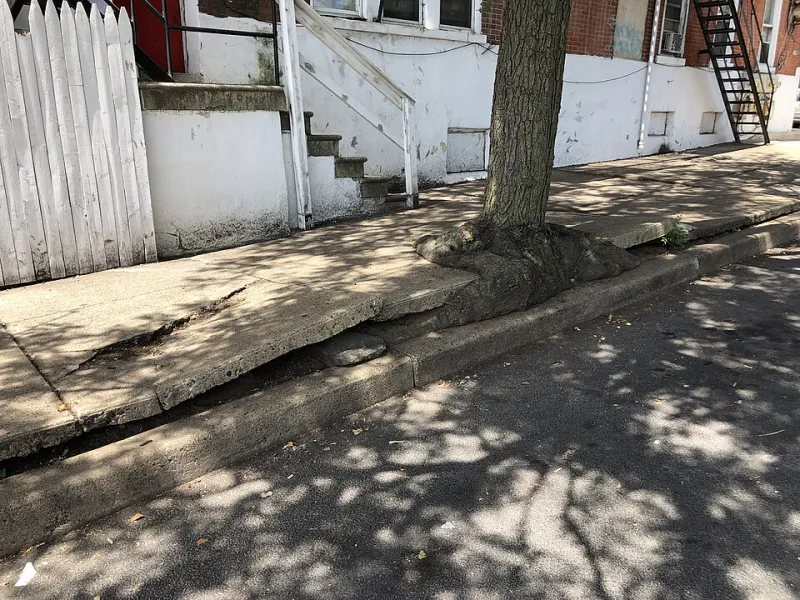
Photo: Famartin, CC BY-SA 4.0, via Wikimedia Commons
Not every tree is a neighborhood asset. Some are long-term adversaries — patient, persistent, and perfectly evolved to lift concrete, crack foundations, and shove fence posts out of plumb. After years of removal and repair calls across Mobile and Baldwin counties, we've identified five species that account for a disproportionate share of the structural damage we're asked to fix.
1. Weeping Willow — The Water Hunter
Willows are gorgeous, and that's the trap. Their roots aggressively seek moisture, traveling 40 feet or more to colonize septic fields, French drains, and pool plumbing. Typical damage: sewer line replacement runs $3,000–$15,000; pool line repairs can exceed $5,000. Safer alternative: river birch offers similar graceful form with far better manners in moist soil.
2. Silver Maple — The Concrete Lifter
Fast growth means shallow, surface-riding roots that heave sidewalks, driveways, and patios within 15 years of planting. Typical damage: driveway slab replacement averages $4,000–$8,000. Safer alternative: Shumard oak delivers comparable shade with a deeper root architecture.
3. Camphor Tree — The Foundation Invader
Widely planted across the Gulf Coast for its evergreen canopy, camphor produces dense surface roots that exploit foundation cracks and slab edges. Once inside a crawl space or slab penetration, roots are extraordinarily difficult to remove. Typical damage: foundation crack repair ranges from $2,500 to well past $10,000. Safer alternative: Southern magnolia provides year-round screening with a taproot-driven habit.
4. Chinese Tallow — The Fence Destroyer
This invasive species sends up root suckers along fence lines and crowds out everything nearby. Its aggressive growth topples lightweight fencing and its seedlings colonize neighboring beds. Typical damage: fence replacement sections run $1,500–$4,000. Safer alternative: yaupon holly offers dense, wildlife-friendly screening without the invasion.
5. Sycamore — The Sidewalk Breaker
The classic American sycamore is magnificent in a park and catastrophic over a sidewalk. Its shallow roots and massive trunk flare lift hardscape relentlessly, and its huge leaves clog gutters every fall. Typical damage: sidewalk and curb repair, often $2,000–$6,000 per affected section. Safer alternative: bald cypress handles wet Mobile soil with a far more restrained footprint.
The Pattern Worth Noticing
Every species on this list shares one trait: rapid growth. The very quality that makes a tree appealing at the nursery — instant shade, quick privacy — is what produces the root mass that damages infrastructure. When selecting trees for tight Mobile lots, prioritize structural discipline over speed. A tree planted with its mature root zone in mind is an asset for generations; one planted carelessly is a countdown clock.