Ten Questions That Separate Real Arborists From Guys With Chainsaws
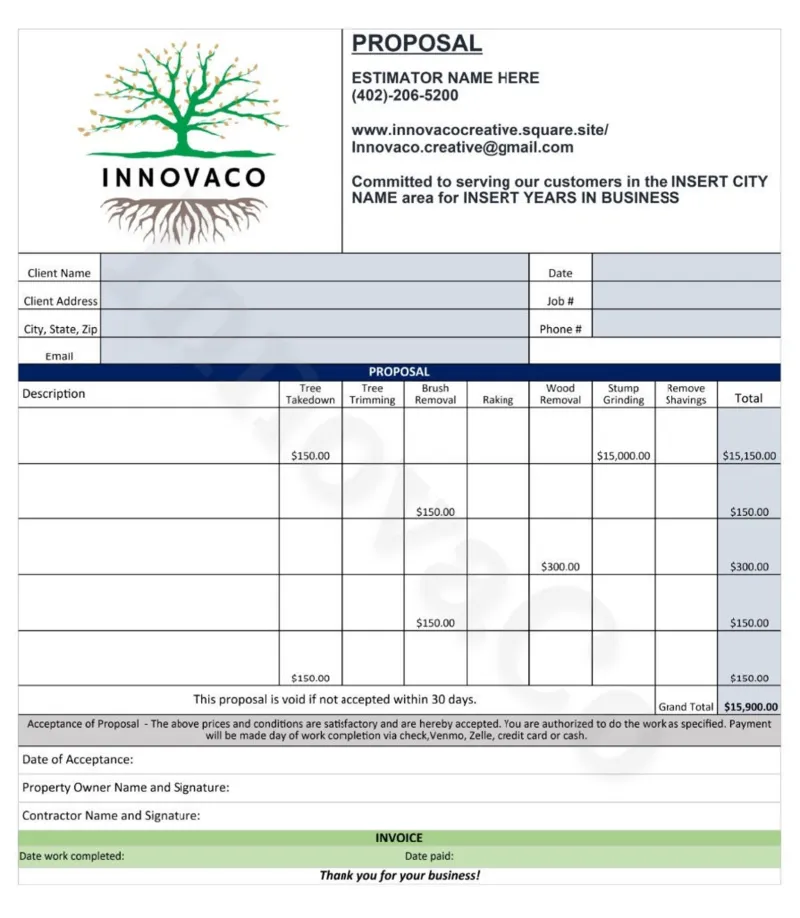
Photo: arborist clipboard consulting homeowner tree estimate, via i.etsystatic.com
Tree work attracts a particular kind of operator: low overhead, no paperwork, and a willingness to quote any job on the spot. Some of these crews do acceptable work. Many do not, and when they do not, the homeowner is left with property damage, injury liability, or a mutilated tree — with no insurance and no recourse.
Alabama does not license tree care companies. That gap puts the entire screening burden on you. Here are the ten questions that do the job, along with the answers that should make you thank them for their time and close the door.
1. Are You a Licensed and Insured Company — and Can You Prove It?
Ask for a certificate of insurance mailed or emailed directly from the insurer, not a photocopy from a glovebox. You need to see general liability and, critically, workers' compensation. If a crew member falls from your tree and the company carries no workers' comp, that injury claim may land on your homeowner's policy. A company that hesitates to provide proof of coverage has answered the question.
2. Is a Certified Arborist Involved in This Job?
The ISA Certified Arborist credential is the industry's baseline standard for tree knowledge. It does not guarantee perfection, but it signals training, testing, and continuing education. For pruning and tree preservation work — as opposed to straightforward removals — an arborist's involvement matters enormously.
Red flag: "We don't need an arborist to cut a tree down." Possibly true for a removal. But a crew that dismisses arboriculture entirely will also not know a hazardous tree from a healthy one, which matters when they recommend removing trees you should keep.
3. Will You Provide a Written Estimate?
Verbal quotes evaporate the moment a dispute arises. A professional estimate specifies the scope of work, which trees, which limbs, cleanup expectations, and total price. Anything ambiguous — "trim the big one in back" — invites scope creep.
4. How Will You Access the Tree?
Bucket truck, climbing, or crane? The answer affects price, lawn damage, and safety. If a crew plans to drive heavy equipment across your septic field or through a neighbor's property without asking, you have learned something important.
5. Will You Spike-Climb This Tree, and Does It Matter?
For removals, climbing spurs are fine. For pruning live trees, spur climbing wounds the trunk and invites disease. A knowledgeable crew knows the difference without being told.
6. What Exactly Gets Removed, and What Stays?
Get specifics: branch-by-branch for pruning, whole-tree for removals. Beware of generic recommendations like "topping" or "rounding over" — these are outdated, harmful practices that no reputable arborist performs on healthy trees.
7. What Does Cleanup Include?
Chips, logs, brush, and raking are separate line items for some crews. Confirm whether firewood stays or goes, whether the stump is ground and to what depth, and whether grinding debris gets hauled or backfilled into the hole.
8. Who Pulls Permits, and Are Any Needed?
Mobile's historic and protected tree provisions can apply to certain properties and street trees. A professional knows when a permit is required and handles the paperwork. A crew that says "permits are the homeowner's problem" may leave you facing municipal citations for a removal they performed.
9. What Happens If Something Goes Wrong?
Property damage, a neighbor's fence, a hidden utility line — ask how the company handles incidents and whether their contract addresses liability. Reputable firms answer this easily and in writing.
10. Can You Provide Local References?
Three recent references from Mobile-area jobs, ideally similar in scope to yours. Call them. Ask about punctuality, cleanup, and whether the final invoice matched the estimate.
Why the Arithmetically Cheapest Bid Is Rarely the Cheapest Job
A pattern we see repeatedly in Mobile: a homeowner collects three estimates, takes the lowest, and spends the following year dealing with the consequences — an injured climber, a gouged lawn, a crepe myrtle butchered into a hat rack, or a removal bill from a second company hired to fix the first.
The questions above take twenty minutes. The damage from skipping them can take years and thousands of dollars to resolve. Any professional worth hiring will welcome them; in our experience, the crews that resent being questioned are the ones the questions were written for.
Before you sign anything for tree work on your Mobile property, ask. Then ask the next company, and compare not just prices — but answers.