Salt Air, Saturated Soil, and Stressed Roots: How Gulf Coast Conditions Demand a Different Approach to Tree Care
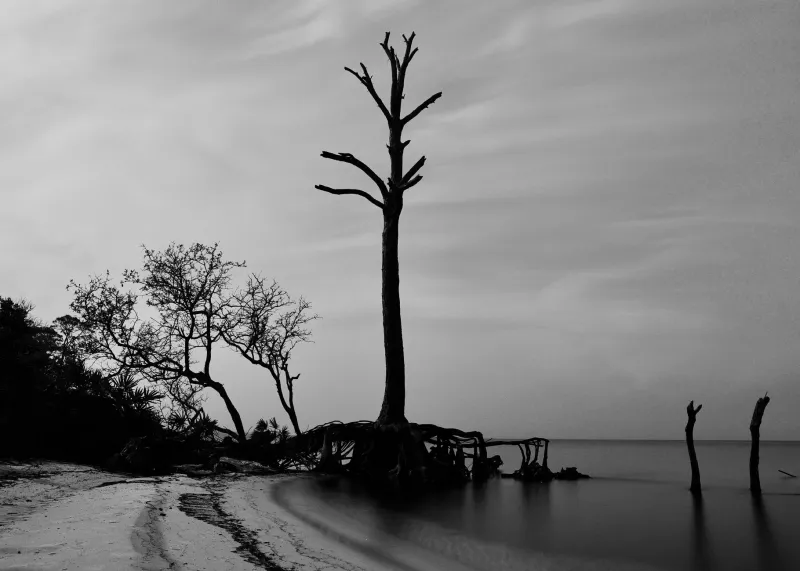
Mobile, Alabama occupies a particular kind of geography—one that shapes everything from its architecture and cuisine to the very trees that line its streets and yards. Positioned at the northern reach of Mobile Bay and within close reach of the Gulf of Mexico, the city exists in a zone where maritime influence and southern climate converge. For trees and the professionals who care for them, that convergence is not merely atmospheric. It is physiological, structural, and deeply consequential.
Understanding why coastal proximity changes the nature of arboricultural work requires looking beneath the surface—literally and figuratively—at the mechanisms by which salt air, moisture-saturated environments, and fluctuating humidity patterns affect tree biology in ways that standard southern horticulture does not fully address.
What Salt Air Actually Does to a Tree
When most residents think about salt damage to vegetation, they picture beachfront plants battered by ocean spray. The reality in Mobile is more nuanced and, in many respects, more insidious. Salt aerosols—microscopic particles carried inland by prevailing Gulf winds—travel well beyond the shoreline. They settle on leaf surfaces, infiltrate soil profiles, and accumulate gradually in ways that become apparent only when a tree begins showing signs of decline.
On the foliar level, salt deposits interfere with the stomatal function that governs gas exchange and moisture regulation. Leaves become less efficient at photosynthesis, and over time, the visible effects emerge: marginal leaf scorch, premature defoliation, and a general reduction in canopy density. These symptoms are frequently misattributed to drought stress or fungal infection, which delays proper diagnosis and treatment.
Below ground, sodium ions that infiltrate the soil displace essential nutrients like calcium and potassium, altering the electrochemical balance that roots depend on for uptake. In clay-heavy soils—common across much of Mobile's older residential landscape—this displacement compounds an already challenging drainage situation. Roots in salt-affected, poorly draining soil are simultaneously deprived of nutrients and vulnerable to anaerobic conditions that promote root rot.
An arborist without specific coastal experience may recognize the surface symptoms without tracing them to their maritime origin. That distinction matters enormously when it comes to prescribing a course of treatment.
Humidity as a Structural and Biological Variable
Mobile consistently ranks among the most humid cities in the United States. Average relative humidity frequently exceeds seventy percent, and during the warmer months, it can sustain levels that create near-constant moisture stress on tree tissues—not from drought, but from the opposite direction.
Persistent high humidity creates ideal conditions for a range of fungal pathogens. Hypoxylon canker, which attacks stressed hardwoods, finds favorable ground in Mobile's moisture-laden summers. Cercospora leaf spot, Phytophthora root rot, and various powdery mildews all thrive when humidity remains elevated for extended periods without the drying intervals that allow plant tissues to recover. The challenge for arborists operating in this environment is that treatment windows are narrow and timing is critical. Fungicide applications made during the wrong humidity conditions may be ineffective or may even exacerbate secondary issues.
Beyond disease, humidity affects wood density and branch tensile strength in ways that are not widely discussed outside coastal arboricultural circles. Repeated cycles of moisture absorption and partial drying cause wood fibers to swell and contract at rates that gradually compromise structural integrity. Older hardwoods—particularly the live oaks and water oaks so prevalent throughout Mobile's neighborhoods—may develop internal decay that progresses faster than in drier climates, even when the exterior of the tree appears sound. This is one reason why probing and resistance measurement tools are standard equipment for experienced coastal arborists, rather than optional diagnostic aids.
Root Systems Under Coastal Pressure
The root architecture of trees in Mobile's coastal-influenced landscape reflects the compounded stresses of the environment. Shallow water tables, common throughout the city's lower-lying areas, restrict the depth to which roots can develop without encountering anaerobic conditions. Salt infiltration, as noted above, further reduces the viable rooting zone. The result is that many trees in Mobile's residential corridors are operating with root systems that are smaller and shallower than the canopy above them would suggest.
This imbalance has direct implications for storm resilience—a subject of perennial concern in a city that sits squarely within the Gulf Coast hurricane corridor. A tree with a compromised root plate is not merely a health concern; it is a structural hazard. The connection between coastal soil conditions and wind-throw susceptibility is one that homeowners frequently underestimate, and one that arborists with inland experience may not fully account for when conducting risk assessments.
Proper root zone management in Mobile involves more than mulching and irrigation scheduling. It requires an understanding of how soil salinity, compaction, and drainage interact with the specific species planted on a given property. Selecting trees that tolerate periodic salt exposure, managing soil pH to counteract ionic imbalance, and ensuring adequate drainage through strategic grading or amended planting beds are all components of a coastal-informed approach that goes beyond conventional tree care.
Why Local Knowledge Is Not Optional
The arboricultural profession is built on a foundation of science that applies broadly across climates and species. Credentialed arborists bring training that is rigorous and transferable. But certification alone does not confer the experiential knowledge that comes from years of working within a specific environmental context. The patterns that an arborist in Birmingham or Atlanta learns to recognize—the typical progression of disease, the seasonal rhythms of growth and dormancy, the soil conditions that most commonly underlie decline—are not identical to the patterns that define tree health and failure in Mobile.
This is not a criticism of practitioners elsewhere. It is an acknowledgment that coastal arboriculture is a specialized discipline within a specialized field. The combination of salt exposure, sustained humidity, shallow water tables, hurricane-force wind events, and the particular species palette that thrives in Mobile's climate creates a matrix of variables that rewards deep local familiarity.
For property owners in Mobile, the practical implication is straightforward: when selecting an arborist, local tenure and coastal experience are meaningful qualifications, not mere marketing distinctions. An arborist who has spent years diagnosing decline in Mobile's live oaks, managing disease pressure in its historic neighborhoods, and preparing trees for Gulf storm seasons brings a calibrated understanding that cannot be replicated by general credentials alone.
Preserving What Makes Mobile's Canopy Distinctive
Mobile's tree canopy is part of its civic identity. The cathedral arches of moss-draped oaks, the flowering canopies of mature magnolias, the deep shade of established pecan and sweetgum trees—these are not incidental features of the landscape. They are living infrastructure that moderates temperature, manages stormwater, supports local ecology, and contributes materially to property values and neighborhood character.
Preserving that canopy against the specific pressures of coastal Alabama's climate requires care that is both scientifically grounded and locally attuned. The Gulf does not offer the same conditions as the Appalachian foothills or the Tennessee Valley, and the trees that flourish here deserve arboricultural attention calibrated to where they actually grow.
At Mobile Arborist Co., our work is rooted—in every sense—in the particular demands of this city and its coastal environment. That specificity is not incidental to what we do. It is the foundation of it.