What Stays in the Ground Doesn't Stay Free: The Real Price of Skipping Stump Removal in Mobile
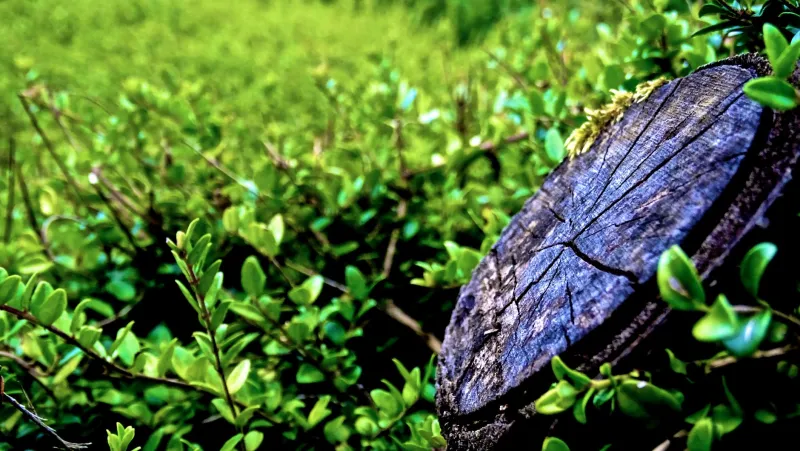
When a tree comes down on a Mobile property—whether by storm damage, disease, or deliberate removal—homeowners often breathe a sigh of relief once the trunk and major limbs are hauled away. What remains, however, is frequently underestimated: a stump and its root system, sitting just below the surface, quietly setting the stage for a range of problems that become far more expensive to address with each passing season.
The impulse to defer stump grinding is understandable. It represents an additional cost at a moment when a homeowner has already spent money on tree removal. But the financial logic of skipping it rarely holds up under scrutiny. What appears to be a savings today often becomes a compounding liability over the next three to five years.
The Biology of What You're Leaving Behind
A freshly cut stump is not an inert object. Even after the visible tree is gone, the root system remains alive in varying degrees depending on the species. In Mobile's warm, humid climate—conditions that accelerate biological activity year-round—stumps from species like water oaks, sweetgums, and certain maples will actively attempt to regenerate. Sprouts emerge from the base and from lateral roots, sometimes appearing several feet away from the original stump. What begins as a minor nuisance becomes a recurring maintenance task that never fully resolves itself without mechanical or chemical intervention.
Beyond regrowth, the decaying organic matter of an aging stump creates an ideal habitat for wood-boring insects and fungi. Mobile's subtropical environment is already hospitable to termites, and a decomposing stump provides exactly the moist, cellulose-rich environment these insects prefer. Once a termite colony establishes itself in a stump, the proximity to your home's foundation, wooden fencing, or adjacent structures becomes a genuine structural concern—one that carries far greater remediation costs than the original grinding would have.
Fungal Spread and Its Effect on Surrounding Trees
Decaying stumps are also vectors for soil-borne fungal pathogens. Root rot fungi such as Armillaria species can spread through a root system and infect neighboring healthy trees. In a landscape where mature oaks and ornamental plantings represent significant investment, introducing a persistent fungal presence through an untreated stump is a risk that often goes unappreciated until visible symptoms appear in trees that were previously thriving.
By the time a homeowner notices mushroom-like fruiting bodies near a stump or witnesses canopy dieback in an adjacent tree, the fungal network may already extend well beyond the visible decay. Treatment at that stage is rarely straightforward and is frequently more costly than the stump removal that could have interrupted the cycle at the outset.
Landscape and Planting Complications
For homeowners who intend to replant in the area where a tree was removed—whether with a new specimen tree, lawn grass, or garden beds—an untreated stump creates practical obstacles that are easy to underestimate during the planning phase.
Root systems from removed trees can extend two to three times the canopy's former radius. These roots decompose unevenly over time, creating voids in the soil as they break down. In Mobile's clay-heavy soils, this uneven decomposition can cause surface settling, making it difficult to establish a level lawn or stable planting bed. New trees planted in close proximity to an untreated stump may also compete with residual root material for nutrients, or worse, become exposed to the same fungal pathogens discussed above.
Grinding the stump to a depth of eight to twelve inches below grade—standard practice for a qualified arborist—removes the bulk of the crown root system and allows for proper soil amendment before replanting. Skipping this step means working around a structural and biological obstacle indefinitely.
The Mowing and Maintenance Factor
In purely practical terms, stumps left at or near grade level create ongoing nuisances for lawn maintenance. Mowing around an irregular stump requires time and precision, and low-cut stumps are a known hazard for mower blades and equipment. Over years of mowing seasons, the cumulative time spent navigating around a stump—combined with any equipment damage—adds a quiet but real cost to property upkeep.
For rental properties or homes with professional lawn maintenance contracts, stumps can also trigger additional service fees or liability considerations that the property owner may not anticipate at the time of the original tree removal.
When the Bill Finally Arrives
Perhaps the most instructive way to understand the true cost of deferring stump removal is to look at what remediation typically involves after several years of inaction. A stump that has been left to partially decay and is now hosting active pest colonies or fungal growth may require not only grinding but also soil treatment, root excavation in specific zones, and in some cases, targeted pest management before any replanting can occur. The combined cost of these interventions routinely exceeds what professional stump grinding would have cost immediately following tree removal.
Additionally, stumps that have deteriorated significantly may be more difficult to grind efficiently, as partially rotted wood presents different operational challenges than a fresh-cut stump. Equipment time and labor costs can reflect this.
What Proper Stump Removal Actually Involves
For homeowners unfamiliar with the process, stump grinding involves the use of a mechanical grinder that reduces the stump and upper root flare to wood chips, typically to a depth sufficient to allow for turf or planting establishment above. The resulting wood chip material can often be used as mulch in other areas of the landscape, providing some returned value from the process.
In cases where a stump is located near a structure, underground utility lines, or hardscape features, a qualified arborist will assess the appropriate grinding depth and lateral extent of the work before proceeding. This is one of several reasons why stump removal, like tree removal itself, is best entrusted to a licensed professional familiar with the specific conditions of Mobile's urban and suburban landscape.
A Decision Worth Making at the Right Time
The window immediately following tree removal is the most cost-effective moment to address the stump. Equipment is already on site, the crew is familiar with the tree's root structure, and the stump itself is in optimal condition for efficient grinding. Homeowners who bundle stump removal with the original tree service typically find the incremental cost modest relative to the long-term value it delivers.
Mobile's climate does not forgive neglect easily. The same warmth and moisture that make this region ideal for growing magnificent trees also accelerate the biological processes that turn a forgotten stump into a persistent property problem. Addressing what remains in the ground is not an optional finishing touch—it is the final and essential step in responsible tree removal.