Fewer Leaves, Hotter Streets: Understanding Mobile's Shrinking Tree Canopy and How Property Owners Can Help Reverse It
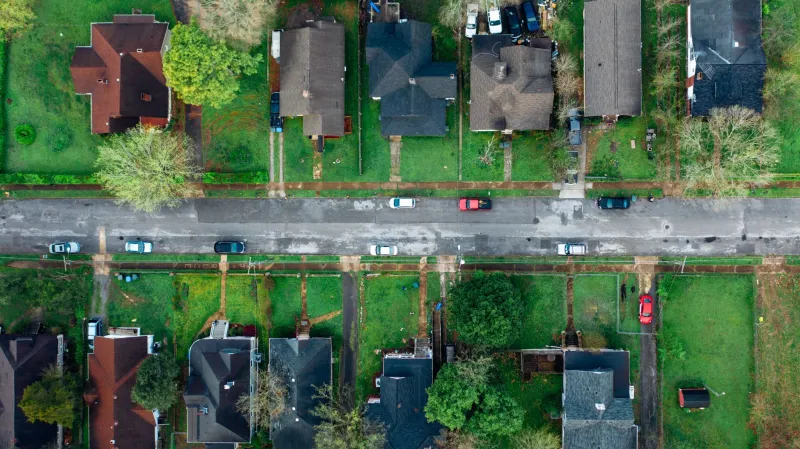
There is a quieter version of Mobile that older residents remember—one where summer sidewalks stayed shaded well into the afternoon and streets felt a measurable degree cooler beneath the interlocked canopy of mature oaks and magnolias. That version of the city hasn't disappeared entirely, but it has receded. Aerial imagery and municipal assessments compiled over the past two decades reveal a pattern that urban foresters have been tracking with growing concern: Mobile's tree canopy, particularly in older residential corridors and transitional commercial zones, has contracted in ways that are reshaping daily life at the neighborhood level.
This is not simply an aesthetic concern. It is a public health issue, an environmental issue, and a property value issue—one that originates in decisions made at the municipal scale but ultimately lands on the shoulders of individual homeowners.
What the Data Actually Shows
Urban canopy assessments conducted across Gulf Coast municipalities consistently identify Mobile among the cities experiencing measurable loss in tree coverage. While precise figures shift depending on methodology and measurement period, research aligned with Alabama's urban forestry initiatives suggests that certain Mobile neighborhoods have lost between 15 and 25 percent of their canopy coverage since the early 2000s. The losses are not evenly distributed. Areas that experienced rapid commercial development along major corridors, combined with neighborhoods where aging tree populations were not systematically replaced, account for a disproportionate share of the decline.
The consequences compound quickly. Mature trees provide stormwater interception, reducing the volume of runoff that strains Mobile's drainage infrastructure during heavy rainfall events. They moderate surface temperatures, with studies consistently demonstrating that heavily canopied streets can run 10 to 15 degrees Fahrenheit cooler than unshaded equivalents on peak summer days. They sequester carbon, support urban wildlife corridors, and—by no small measure—sustain property values in neighborhoods where buyers actively seek that established, green character.
When canopy disappears faster than it is replenished, all of those services diminish simultaneously.
Three Forces Driving the Decline
Understanding canopy loss in Mobile requires examining three overlapping pressures that rarely act in isolation.
Development and impervious surface expansion. Each new commercial pad, parking lot, or residential clearing removes trees that took decades to reach functional maturity. Replacement planting requirements, where they exist, frequently substitute young, small-caliper trees that will not approximate the canopy coverage of what was removed for 20 to 30 years—if they survive that long without adequate establishment care.
Deferred and neglected maintenance. A structurally compromised tree that might have been preserved through timely pruning or cabling becomes a liability that eventually must be removed. Across aging residential neighborhoods, the pattern repeats: trees that received no professional attention during their middle years arrive at structural failure while still viable as canopy contributors. Removal without replacement is the predictable result.
Pest pressure and disease. Mobile's climate creates favorable conditions for a range of insects and pathogens that target specific tree species. Laurel wilt, transmitted by the invasive redbay ambrosia beetle, has devastated redbay populations throughout the region. Various wood-boring beetles exploit trees already stressed by compacted soils or drought. Hypoxylon canker, a fungal pathogen that accelerates in heat-stressed oaks, has contributed to the loss of mature specimens that appeared outwardly healthy until structural failure occurred. Each species-specific threat compounds the aggregate canopy loss when replacement planting doesn't account for the same vulnerabilities.
What Happens to a Neighborhood When Its Trees Disappear
The effects are measurable and cumulative. Surface temperatures rise, increasing cooling costs for residents and amplifying heat-related health risks for vulnerable populations. Stormwater runoff increases, accelerating erosion and placing greater demand on municipal drainage systems already challenged by Mobile's rainfall intensity. The ecological services that mature trees provide—habitat for pollinators, food sources for migratory birds, soil stabilization—diminish proportionally.
Perhaps less quantifiable but equally real is the character shift. Mobile's identity is intertwined with its tree-lined streets and cathedral canopy of live oaks. Neighborhoods that lose that character lose something that cannot be replaced within a single generation.
What Individual Homeowners Can Do Right Now
The scale of the problem can make individual action feel inconsequential. It is not. Urban canopy is, at its core, an aggregate of private decisions made on private parcels. Meaningful restoration begins there.
Plant deliberately and plant soon. The most important contribution any property owner can make is adding canopy-scale trees to their landscape. Native species adapted to Mobile's conditions—live oaks, water oaks, Southern magnolias, bald cypresses in appropriate settings, and native pecans—provide the greatest long-term value. Selection should account for mature size, soil conditions, and proximity to structures. Consulting a certified arborist before planting ensures that the species chosen will actually reach canopy scale on that specific site.
Protect what is already growing. Established trees are irreplaceable in the near term. Root zone protection during any construction or landscaping activity, proper mulching practices, and scheduled professional inspections are the most cost-effective investments a property owner can make. A tree that is preserved is worth decades of growth that a replacement cannot immediately provide.
Address structural issues before they become removal decisions. Many trees that are ultimately removed could have been retained with timely intervention. Crown cleaning, deadwood removal, and structural pruning performed on a regular schedule extend the functional lifespan of mature trees considerably. When structural weakness is identified, cabling and bracing offer viable alternatives to removal in appropriate cases.
Resist the impulse to remove first and question later. Following storm events or pest discoveries, the instinct to remove a tree perceived as risky is understandable. A qualified arborist assessment, however, frequently identifies preservation options that a property owner acting on first impressions would overlook. Not every damaged tree is a dead tree.
Participating in Broader Restoration Efforts
Individual action, while essential, operates most effectively within a broader community framework. Mobile has seen periodic urban forestry initiatives through municipal programs and nonprofit partnerships that offer subsidized or no-cost trees to qualifying residents. Engaging with those programs—and advocating for their continuation and expansion—multiplies the impact of what any single property owner can accomplish alone.
Neighborhood associations that adopt tree planting and stewardship goals, coordinate with city arborists, and document canopy changes over time create accountability structures that sustain momentum beyond any single planting season. The neighborhoods in Mobile that have maintained their canopy character are, without exception, the ones where organized attention to trees has been sustained over many years.
The Compounding Value of Starting Now
Trees operate on timelines that require patience and foresight. A live oak planted this season will not provide meaningful canopy shade for another decade. That reality makes the urgency of planting now—rather than waiting for conditions that feel more convenient—especially clear. The canopy Mobile's residents will rely on in 2045 is determined largely by the planting decisions made in the next few years.
At Mobile Arborist Co., we work with residential and commercial clients across the area to assess existing trees, guide species selection for new planting, and develop maintenance schedules that keep mature trees in productive, structurally sound condition. Reversing a two-decade trend in canopy loss is not a task any single party accomplishes alone—but it begins with property owners who understand what is at stake and act accordingly.